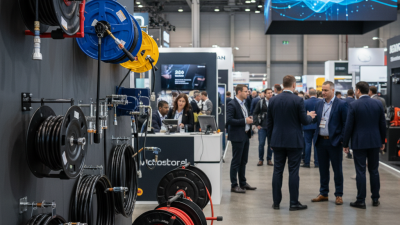
How to Choose China Top Air Hose Reel Manufacturers?
Choosing China’s top air hose reel manufacturers requires more than comparing prices on a supplier website. A reel may look polished in photographs, yet fail under daily workshop pressure. You need evidence of engineering control, material consistency, testing, and dependable after-sales support.
Industrial hose-systems specialist John M. Heller says, “A reliable air hose reel is judged by its recovery, sealing, and service life—not its appearance.” This practical view matters when reviewing Chinese manufacturers. Ask whether the supplier produces the spring, drum, swivel, and hose in-house. Confirm the hose’s working pressure, temperature range, length, and retraction cycles. Request test records, product drawings, and clear warranty terms. Strong manufacturers answer with specifications. Weak ones answer with promises.
Look closely at small details. Does the reel retract smoothly after several pulls? Is the mounting bracket thick enough for vibration? Does the swivel resist leakage after repeated rotation? These details reveal manufacturing discipline. Certifications can help, but they are not the entire decision. Factory audits, sample testing, production photos, and customer references provide stronger context.
No checklist is perfect. I have seen attractive samples hide inconsistent assembly. That is why a trial order deserves careful inspection. Compare the sample with mass-production units, packaging, labels, and documentation. The best partner should communicate clearly, accept reasonable technical questions, and improve when problems appear. Choosing an air hose reel manufacturer is not merely a purchasing task. It is a long-term reliability decision.
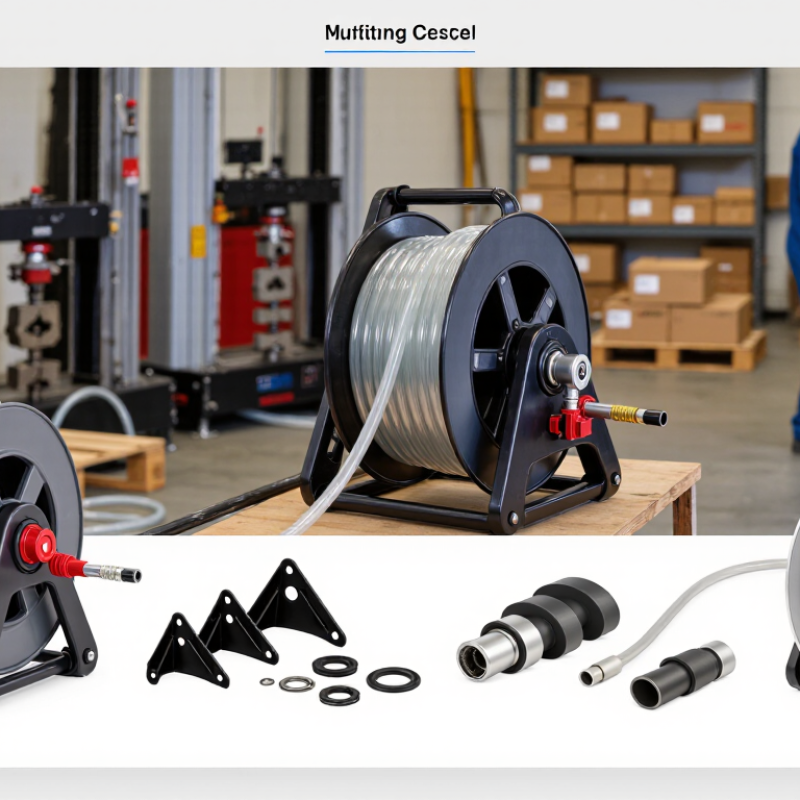
Define Your Air Hose Reel Requirements and Application Conditions
How to Choose China Top Air Hose Reel Manufacturers?
Define Your Air Hose Reel Requirements and Application Conditions
Before contacting manufacturers, define the working conditions clearly. Identify the required hose length, inner diameter, operating pressure, and air flow. Check the air temperature and surrounding environment too. A workshop reel may face oil mist, dust, or frequent impacts. An outdoor installation may need stronger corrosion resistance. Wall, ceiling, vehicle, and floor mounting also require different structures.
Think about daily use, not only catalogue specifications. I once underestimated the effect of hose weight on automatic retraction. The reel worked well during testing, but felt awkward after repeated use. That mistake changed my evaluation process. Ask for material details, pressure-test records, spring-cycle data, and clear installation instructions. Reliable manufacturers should explain tolerances and limitations instead of promising universal performance. Request a sample when the application is unusual.
Tips: Prepare a simple requirement sheet before requesting quotations. Include hose material, maximum pressure, temperature range, mounting position, connection size, and expected daily cycles. Ask whether replacement parts are available and how defects are handled. Do not choose the lowest price too quickly. A cheaper reel may use thinner brackets or a weaker spring, creating hidden maintenance costs. Leave room for improvement; your first specification may not be perfect.
Compare Manufacturer Experience, Product Range, and Customization Options
Choosing China’s top air hose reel manufacturer requires more than comparing catalogue prices. Experience should be measurable. Review factory operating years, export markets, testing records, and recent customer references. Ask for pressure-cycle results, corrosion tests, and temperature ratings. A polished website proves little. Request evidence.
Product range matters because workshops rarely use one standard reel. Compare manual, spring-retractable, motorized, wall-mounted, ceiling-mounted, and enclosed models. Check hose diameter, working pressure, length, swivel design, braking control, and replacement-part availability. The 2024 Mordor Intelligence report estimates the global industrial hose market at about USD 14.7 billion, with continued growth through 2029. This expansion increases supplier choices, but also makes technical comparison harder.
Customization can separate a capable manufacturer from a trading intermediary. Confirm whether the factory can adjust hose material, reel housing, mounting bracket, inlet thread, label, packaging, and batch color. For pneumatic equipment, ISO 4414 emphasizes safe design and controlled pressure. Ask for drawings before production. Confirm tolerances in writing. Small details become expensive later. My own preference is a sample-based audit, not a video call alone. Still, even sampling has limits. One perfect unit may hide inconsistent assembly. Compare several samples, inspect winding tension, and test leakage after repeated retraction. A manufacturer that explains weaknesses openly may deserve more trust than one promising flawless performance.
| Evaluation Dimension | Manufacturer Profile 1 Established Industrial Supplier |
Manufacturer Profile 2 Broad Product Specialist |
Manufacturer Profile 3 OEM-Focused Factory |
Manufacturer Profile 4 Professional Workshop Supplier |
Manufacturer Profile 5 Compact Reel Producer |
|---|---|---|---|---|---|
| Typical Operating History | 15–20 years of production experience | 10–15 years of production experience | 8–12 years of production experience | 5–10 years of production experience | 3–8 years of production experience |
| Primary Market Orientation | Industrial distribution and long-term project supply | Industrial, automotive, agricultural, and commercial applications | Private-label, OEM, and contract manufacturing | Workshops, garages, maintenance departments, and small factories | Light-duty commercial and home-workshop applications |
| Product Range | Manual reels Spring-return reels Motorized reels Wall and ceiling mounts | Air hose reels Water hose reels Electric cable reels Welding reels | OEM air reels Heavy-duty reels Stainless-steel options Custom assemblies | Manual reels Spring-return reels Portable reels Basic accessories | Compact spring reels Plastic-body reels Entry-level manual reels |
| Common Hose Compatibility | Rubber, PVC, hybrid polymer, and thermoplastic hoses | PVC, rubber, polyurethane, hybrid polymer, and low-temperature hoses | Rubber, PVC, polyurethane, and customer-specified hose materials | PVC, polyurethane, and standard rubber hoses | PVC and lightweight polyurethane hoses |
| Typical Hose Inner Diameter | 6–13 mm | 6–16 mm | 6–19 mm, subject to design | 6–13 mm | 6–10 mm |
| Typical Hose Length | 10–30 m | 10–30 m | Custom lengths, commonly 10–30 m | 10–20 m | 8–15 m |
| Typical Working Pressure | 8–20 bar, depending on hose and reel construction | 8–20 bar, depending on application | 10–30 bar for selected industrial configurations | 8–15 bar | 6–10 bar |
| Housing Materials | Powder-coated steel, stainless steel, and impact-resistant polymer | Powder-coated steel, aluminum, stainless steel, and reinforced polymer | Customer-selected steel, aluminum, stainless steel, or polymer | Powder-coated steel and reinforced plastic | Reinforced plastic and light-gauge steel |
| Rewind Mechanisms | Spring-return, manual crank, and motorized options | Spring-return, manual crank, and selected motorized options | Spring-return, manual, motorized, and customized mechanisms | Spring-return and manual crank | Spring-return and manual crank |
| Customization Capability |
High Hose length, inlet orientation, mounting bracket, spring force, and packaging |
High Reel type, hose material, fittings, color, labeling, and packaging |
Very High Housing design, tooling, hose specification, fittings, logo application, and complete OEM packaging |
Medium Hose length, color, fittings, and mounting accessories |
Low to Medium Color, hose length, label, and standard fitting changes |
| Prototype and Engineering Support | Technical drawings and sample testing generally available | Application selection, sample testing, and technical documentation generally available | Dedicated design support, CAD drawings, prototypes, and design revisions | Basic drawings and sample modifications | Standard-product samples with limited engineering support |
| Quality-Control Focus | Incoming-material checks, pressure testing, dimensional inspection, and final assembly inspection | Material inspection, leak testing, rewind-cycle checks, and packaging inspection | Project-specific inspection plans, pressure tests, batch traceability, and pre-shipment inspection | Basic pressure, leakage, and visual inspections | Visual inspection and basic functional testing |
| Common Compliance Documentation | Material certificates, test reports, and export documentation upon request | Product specifications, test reports, and selected market documentation | Customer-defined inspection records, technical files, and export documentation | Basic product specifications and inspection records | Basic specifications and packing documentation |
| Typical Minimum Order Approach | Small trial orders may be accepted; volume pricing for repeat orders | Mixed-model orders may be available with quantity requirements by model | Prototype quantities may be accepted; tooling or setup fees can apply to new designs | Small and medium orders commonly supported | Low-volume standard orders commonly supported |
| Best Fit for Buyers | Distributors requiring stable quality, broad support, and repeat supply | Importers seeking multiple reel categories from one supplier | Brands requiring private-label products or application-specific designs | Workshops and distributors buying reliable standard models | Buyers prioritizing compact size and competitive entry-level pricing |
| Key Verification Questions | Can the supplier provide pressure-test records, cycle-test results, and long-term supply references? | Are all listed product categories manufactured in-house or sourced from third parties? | Who owns the tooling, drawings, and customized design after development? | What inspection procedures are completed before shipment? | Can the reel withstand the required pressure, hose weight, and rewind cycles? |
Evaluate Materials, Manufacturing Standards, and Product Safety
When choosing China’s top air hose reel manufacturers, inspect materials before comparing prices. A reel should match its working environment, pressure, temperature, and hose movement. Powder-coated steel suits workshops, while aluminum reduces weight and corrosion exposure. The hose deserves equal attention. Polyurethane is flexible, but rubber often tolerates harsher industrial conditions. Check the swivel, spring, seals, and mounting bracket for compatible materials. Small parts fail first.
Manufacturing discipline matters. Ask for batch traceability, pressure testing records, hose burst data, and retraction-cycle results. ISO 12100 supports documented machinery risk assessment, while ISO 4414 addresses pneumatic system safety and unexpected movement. A credible supplier should explain how these principles reach the production line. Look for controlled welding, consistent crimping, calibrated gauges, and final inspection records. A polished catalog is not proof. Details matter.
Safety testing should include leakage, hose pull, locking performance, and bracket strength. The U.S. Department of Energy’s Improving Compressed Air System Performance sourcebook estimates that leaks can waste 20–30% of compressor output. That loss raises operating costs and may hide damaged connections. OSHA’s compressed-air guidance also limits cleaning pressure to 30 psi under specified conditions. Confirm pressure ratings, guarding, and installation instructions before approval. I would still request independent test evidence. Supplier documents can be incomplete, and that weakness deserves attention.
Check Quality Control, Certifications, Pricing, and Production Capacity
Choosing a top China air hose reel manufacturer requires more than comparing online catalogs. During factory visits, I inspect incoming steel, hose compounds, spring tension, and frame welding. Small scratches often reveal rushed handling. Ask for inspection records, not polished claims. A reliable supplier can explain pressure tests, leakage checks, torque measurements, and final packaging controls. Request sample reports with dates and batch numbers. This makes quality easier to verify.
Certifications should match the product and destination market. Check current certificates, issuing bodies, model coverage, and expiry dates. A certificate copied into a brochure proves little. Ask whether production units follow the tested design. I also compare traceability labels on reels, cartons, and spare parts. This step feels slow. It prevents confusion later. Still, no checklist is perfect. Independent testing may expose weaknesses that factory documents miss.
Pricing needs a complete comparison. Include hose length, material, swivel quality, fittings, packaging, tooling, inspection, and shipping terms. The cheapest quotation may hide thinner steel or a shorter service life. Ask for a costed specification and a clear replacement policy. Production capacity matters when orders grow. Review monthly output, machine numbers, staffing, lead times, and recent delivery records. Request a pilot order before committing to volume. A factory may promise ten thousand units monthly, yet seasonal demand can change that figure. Discuss realistic capacity, not impressive capacity.
Verify After-Sales Service, Export Experience, and Supplier Reliability
How to Choose China Top Air Hose Reel Manufacturers?
When choosing an air hose reel manufacturer in China, after-sales service deserves careful attention. Ask for written warranty terms, repair procedures, and replacement-part availability. Confirm who handles technical questions after delivery. A reliable supplier should provide clear response times, installation guidance, and troubleshooting support. Request photos of spare parts, packaging, and finished reels before shipment. Details matter.
Tips: Check whether the supplier has exported similar hose reels to your market. Ask for redacted invoices, shipping documents, or customer references when available. Review their export experience, product certifications, and ability to prepare accurate customs documents. Do not rely only on a polished website. It can hide weak communication or inconsistent production. Ask one technical question and observe the reply. Is it specific, fast, and useful?
Supplier reliability also appears in small actions. The manufacturer should confirm material grades, reel dimensions, pressure ratings, and testing methods. Request a sample inspection report and compare it with the delivered product. A stable supplier will explain delays honestly instead of offering vague promises. Some buyers move too quickly after receiving a low quotation. That is understandable, but it can create expensive problems later. Reliability is not proven by price alone. Check production capacity, quality records, payment terms, and service contacts before making a decision.
Related Posts
-
Air Hose Reel Tips for Buyers at the 139th Canton Fair?
-
China Top 10 Air Hose Reel Manufacturers for Global Buyers
-
10 Amazing Benefits of Using an Air Hose Reel for Your Workshop
-
China Top 10 Heavy Duty Hose Reel Manufacturers?
-
How to Choose the Right Industrial Hose Reel for Your Needs?
-
2026 Best High Pressure Hose Reel Options for Efficient Watering Systems?