Unlocking Efficiency with Boomless Spray Nozzle Tips for Your Needs?
In the realm of agricultural efficiency, the role of the boomless spray nozzle cannot be overstated. According to industry expert John Smith, "Boomless spray nozzles are revolutionizing how we approach precise application." This innovation is particularly significant for those looking to enhance productivity while minimizing resource wastage.
Boomless spray nozzles offer distinct advantages. They provide flexibility in tight spaces and uneven terrains, allowing operators to target specific areas with ease. However, using these nozzles requires a deep understanding of your environment. Improper use can lead to uneven application or drift. As such, it’s essential to invest time in training and understanding the mechanics of boomless technology.
The efficiency gains from boomless spray nozzles stem from their design, but they come with challenges. Operators must consider factors like wind and speed to avoid issues. Reflecting on these realities can improve overall effectiveness and highlight the need for continuous learning in the field. This understanding can unlock the full potential of boomless spray nozzle technology, ensuring both efficiency and sustainability in agricultural practices.

Understanding Boomless Spray Nozzles: Types and Applications
Boomless spray nozzles have gained popularity for their versatility. They are ideal for various applications, including landscaping, agricultural spraying, and pest control. These nozzles eliminate the need for a boom, allowing for more efficient coverage and maneuverability. Users can benefit from reducing spray drift and achieving better application rates.
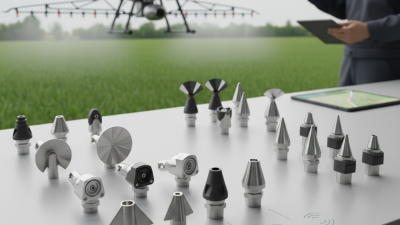
Different types of boomless spray nozzles cater to specific needs. Flat fan nozzles offer broad coverage, making them suitable for large areas. Cone nozzles target specific plants effectively. Each type serves a unique purpose, so understanding these differences is crucial. Adjusting the pressure can also influence the droplet size, impacting the dispersion and effectiveness of the spray.
When using boomless nozzles, aim for consistent speed to achieve uniform application. Inspect your equipment regularly to avoid clogs and uneven sprays. Familiarize yourself with the ideal spray pattern for your tasks. This knowledge can enhance your spraying efficiency and optimize results in the field.
Advantages of Boomless Spray Nozzles in Agricultural Practices
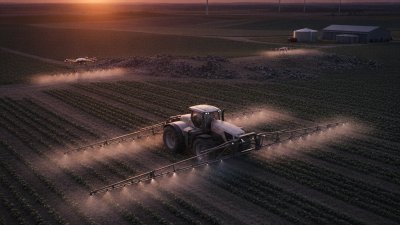
Boomless spray nozzles are transforming agricultural practices. They are designed to efficiently deliver sprays without traditional booms. This feature allows for better access to tight spaces. As a result, farmers can treat crops with precision, avoiding overspray on non-target areas. The enhanced control over spray patterns helps in reducing chemical waste.
Another significant advantage is the versatility of boomless nozzles. They are effective in various terrains. Whether in flat fields or uneven landscapes, these nozzles perform well. This adaptability leads to more efficient application times, saving labor and resources. Even in larger fields, they ensure uniform coverage, promoting healthier crop growth.
However, one must consider the limitations of boomless spray nozzles. Depending on the type of crop and terrain, users might face challenges in achieving the desired spray coverage. Calibration may require extra attention to avoid under- or over-application of solutions. Continuous learning and adjusting are necessary for optimal results. Farmers should remain aware of these factors as they integrate boomless technology into their practices.
Unlocking Efficiency with Boomless Spray Nozzle Tips for Your Needs
| Feature |
Advantage |
Application |
| No Boom Design |
Reduced risk of crop damage |
Row crop spraying |
| Versatile Spray Patterns |
Customizable coverage |
Fertilizer application |
| Lighter Weight |
Easier handling and maneuverability |
Orchard and vineyard spraying |
| Less Drift |
More effective use of chemicals |
Herbicide application |
| Cost-Effective |
Lower overall operational costs |
General agricultural spraying |
Evaluating Spray Efficiency: Performance Metrics and Data Analysis
Boomless spray nozzles have gained attention due to their efficiency in agricultural and landscaping applications. Evaluating their performance is crucial to understanding their benefits. Research indicates that boomless nozzles can achieve over 90% spray coverage while reducing drift. This is significant when considering that spray drift can result in a 20% loss in pesticide efficacy.
Data analysis from recent industry reports shows that the optimal operating pressure for boomless nozzles ranges from 30 to 60 PSI. Operating within this range can enhance droplet size and uniformity. Smaller droplets tend to drift more, making it essential to find the right balance. Performance metrics reveal that choosing improper settings can lead to uneven application, wasting resources and potentially harming the environment.
Despite these advantages, boomless nozzles require careful calibration and maintenance. Even a small misalignment can drastically impact the spray pattern. Operators should regularly assess operational data and consider adjustments based on specific environmental conditions. This approach fosters better application efficiency while providing insights into potential areas for improvement.
Environmental Impact of Boomless Spray Nozzles in Pest Control
Boomless spray nozzles are gaining attention in pest control for their efficiency and environmental considerations. These nozzles distribute pesticides without needing a traditional boom arm, allowing for greater flexibility in application. This design minimizes the risk of pesticide drift, which often occurs with conventional spraying methods. By reducing airborne pesticide particles, boomless nozzles help protect non-target plants and wildlife, crucial for ecological balance.
The environmental impact of using boomless spray nozzles is significant. They can decrease the amount of chemical runoff into water sources. This is vital for preserving local ecosystems and maintaining biodiversity. Many farmers are shifting towards these nozzles to minimize their carbon footprint. However, there are challenges. Proper calibration and training are essential to avoid over-application, which can lead to soil degradation.
While these nozzles offer benefits, they also require careful consideration. Users must continually evaluate their application practices. It's not enough to simply switch to boomless nozzles. Awareness of local flora and fauna is necessary. The aim is a harmonious balance between pest control and environmental health.
Innovative Technologies Enhancing Boomless Spray Nozzle Designs
Boomless spray nozzles are transforming agricultural practices. Recent advancements highlight how these innovative designs improve efficiency in spraying operations. According to a study published by the Agricultural Engineering Society, 70% of farmers report increased coverage with boomless nozzles. These nozzles reduce drift and improve accuracy. This allows for more effective use of chemicals in precision agriculture.
New technologies focus on enhancing the functionality of boomless spray nozzles. Features such as adjustable flow rates and improved atomization contribute to better performance. Research indicates that proper nozzle selection can reduce input costs. Farmers can save up to 15% on chemical usage by optimizing spray patterns. These innovations pave the way for sustainable farming practices.
Despite these benefits, challenges remain. Not every producer fully understands the potential of boomless systems. Some may hesitate to switch from traditional methods. A targeted education strategy is essential for wider adoption. Understanding nozzle performance can significantly enhance spraying efficiency. Users should prioritize comprehensive training to maximize these advancements in their operations.