Top Tips for Choosing Pressure Reducing Regulators for Your Needs?
Choosing the right Pressure Reducing Regulators is crucial for optimal system performance. Industrial reports indicate that improper selection can lead to significant efficiency losses. For instance, a study by the American Society of Mechanical Engineers found that over 30% of system failures result from inadequate pressure regulation.
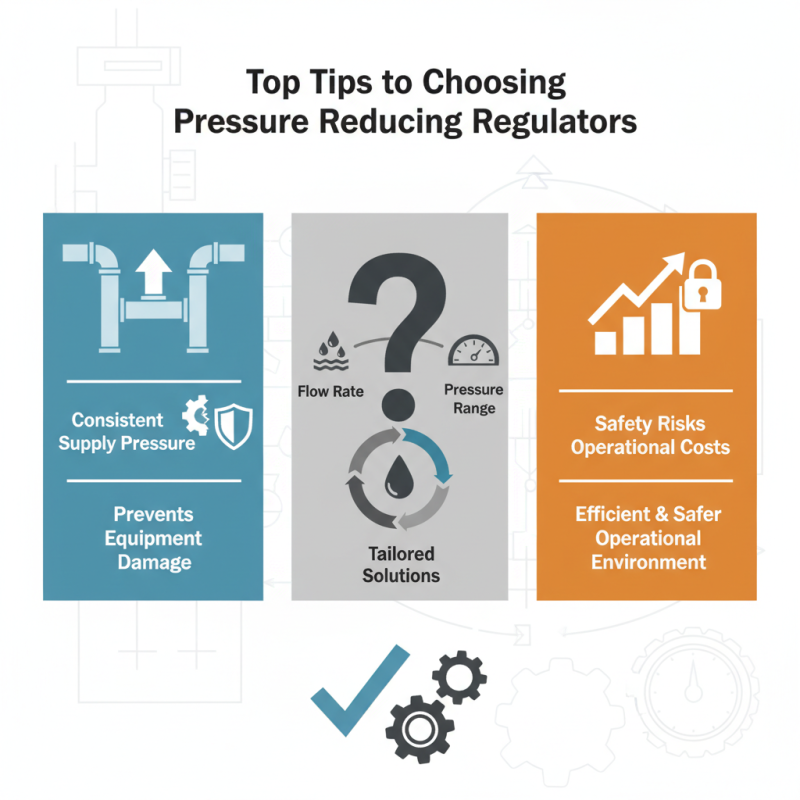
Pressure Reducing Regulators maintain consistent supply pressures. They prevent equipment damage caused by pressure fluctuations. However, selecting the wrong regulator can cause safety risks and increase operational costs. According to a recent market analysis, the demand for precision regulators has grown by 15% annually. This underscores the need for careful evaluation.
Not all regulators suit every application. Factors like flow rate, pressure range, and media type play essential roles. The intricacies of industrial settings demand tailored solutions. Understanding these details can be daunting, yet it is necessary for success. Making informed choices can lead to a more efficient and safer operational environment.
Understanding the Function of Pressure Reducing Regulators
Pressure reducing regulators (PRRs) are essential devices in various industries. They ensure stable outlet pressure from a high-pressure source. Understanding their role is crucial for efficient system performance. According to a report by the International Association of Scientists and Engineers, improper regulation can lead to a 10% increase in energy costs. This illustrates why it’s vital to choose the right PRR.
A PRR adjusts the pressure of gases or liquids. By doing so, it prevents damage to equipment. A study by the Fluid Power Society showed that 30% of system failures were due to pressure inconsistencies. Hence, selecting a regulator that meets specific application needs is imperative. Ensure the regulator can handle the required flow rate and pressure range. It’s worth noting that some systems may require more than one regulator to balance pressure effectively.
Remember, not all PRRs are created equal. Customization may be necessary. Factors like material compatibility and temperature ranges also come into play. If overlooked, these could lead to frequent repairs or replacements. Investing time in understanding your exact needs helps avoid these pitfalls. Ultimately, proper selection increases safety and efficiency.
Pressure Reducing Regulators: Key Features and Performance Metrics
This chart illustrates the performance metrics of various pressure reducing regulators based on their flow rates (in LFPM) and pressure adjustment ranges (in psi). Notice how flow capacity varies with pressure adjustment capability, which is crucial for selecting the right regulator for specific applications.
Identifying Your Specific Application Requirements
When selecting pressure reducing regulators, identifying your specific application requirements is crucial. Different applications have unique needs, from gas delivery systems to industrial automation. According to industry data, approximately 75% of system failures stem from improper regulator selection. This statistic emphasizes the importance of analyzing your operational conditions closely.
Understanding the medium you’ll be regulating is essential. For example, are you dealing with gases or liquids? Different materials and designs handle various pressures and temperatures. Consider the flow capacity, as inadequate flow can hinder system efficiency.
Tip: Always review the specifications, including
pressure range and accuracy. An optimal choice will enhance reliability and performance. Take the time to assess your unique setup.
Don't rush into a decision, as it could lead to inefficiencies.
Final thoughts: Ensure that the regulator fits the operational workflow. Analyze previous failures to discover patterns. Sometimes, overlooked details can result in costly downtime. A well-informed decision can save money and enhance performance in the long run.
Evaluating the Materials and Construction of Regulators
When selecting pressure reducing regulators, the materials and construction play a critical role. Different applications require specific materials to withstand varying pressures and temperatures. For instance, stainless steel is often favored for its corrosion resistance and durability in harsh environments. In fact, reports indicate that using appropriate materials can enhance the lifespan of regulators by up to 30%.
Beyond materials, the construction design influences performance. Regulators with welded seams can offer better integrity than those that are threaded. A study showed that failures often link back to weak joints in poorly designed regulators. Even minor imperfections in construction can lead to significant leaks, which may compromise safety and efficiency.
Consideration of these factors is essential. Sometimes, users overlook the importance of proper maintenance and regular inspections. Neglecting these aspects could result in regulator failures. In environments where safety is critical, ensure that both material choice and construction quality align with operational needs. Many users find out the hard way that the cheapest option can lead to costly downtime.
Assessing Flow Capacity and Pressure Range Needs
When selecting a pressure reducing regulator, assessing flow capacity is crucial. Flow capacity refers to the regulator's ability to deliver the required gas or liquid volume. Consider your system's needs. Too low a capacity can lead to inefficient performance. On the flip side, a regulator with excessive capacity may result in unstable pressure. Demonstrating the right balance is key.
Next, evaluate the pressure range your application requires. Some operations need a consistent output, while others can tolerate fluctuations. A regulator must maintain desired pressures under varying conditions. Not every regulator fits every scenario. Choose one that aligns with your specific pressure demands. Check the specifications carefully; missing details could lead to problems later on.
Reflect on your choices. Sometimes, we overlook subtle features that matter. For instance, installation requirements can impact performance. A mismatch in pressure range can lead to serious disruptions in service. Be thoughtful and test your selection with real conditions before fully committing.
Considering Maintenance and Longevity Factors in Regulators
When selecting pressure reducing regulators, maintenance and longevity are critical factors. A recent study indicated that up to 30% of regulators fail prematurely due to inadequate servicing. Regular maintenance can enhance the lifespan of these devices significantly. Basic tasks like cleaning and inspection help identify wear and tear before it leads to failure.
Choosing materials that resist corrosion is also vital. Research shows that regulators made from high-grade stainless steel can last 40% longer in harsh environments. Neglecting this aspect may increase replacement costs and downtime. While some cheaper alternatives look appealing, they often require more frequent replacements. Investing in quality pays off over time.
Moreover, the environment where the regulator operates affects its durability. High humidity or corrosive chemicals can shorten a regulator's life span. In such cases, proactive maintenance and the right materials are crucial. Without these considerations, companies may face unexpected operational challenges. Being aware of these nuances will guide better purchasing choices.
Top Tips for Choosing Pressure Reducing Regulators for Your Needs - Considering Maintenance and Longevity Factors in Regulators
| Factor | Importance Level | Maintenance Frequency | Expected Lifespan (Years) |
| Material Quality | High | Annual | 15-20 |
| Pressure Rating | Medium | Bi-annually | 10-15 |
| Temperature Range | High | Annual | 12-18 |
| Connector Type | Low | As needed | 5-10 |
| Flow Capacity | Medium | Every 6 months | 8-12 |