
Top Ceramic Rod Manufacturers and Suppliers Worldwide
Choosing the right Ceramic Rod manufacturer requires more than comparing catalog prices. Material purity, dimensional control, surface finish, and application experience can directly influence product performance. This guide reviews leading ceramic rod manufacturers and suppliers worldwide, focusing on practical factors that engineers and purchasing teams can verify.
A reliable supplier should explain its ceramic composition, production methods, tolerances, and inspection procedures. Alumina, zirconia, silicon nitride, and other advanced ceramics offer different combinations of hardness, thermal stability, electrical insulation, and wear resistance. Ask for technical datasheets, sample measurements, and traceable quality records. Small details matter. A polished rod may look perfect, yet hidden porosity or inconsistent diameter can cause failure in a precision assembly.
The companies discussed here serve industries such as electronics, laboratory equipment, medical technology, chemical processing, and high-temperature manufacturing. Their capabilities may include custom lengths, ground surfaces, drilled holes, threaded ends, or complex tolerances. However, supplier information can change, and published claims deserve careful verification. That is an important limitation. Buyers should confirm certifications, production capacity, delivery terms, and current quality controls before placing orders.
This overview combines technical considerations with practical purchasing insight. It aims to help readers compare global suppliers more clearly, not simply rank them by reputation. The best choice depends on the operating temperature, mechanical load, electrical requirements, geometry, and expected service life of each project. Think beyond the brochure. Examine the evidence.
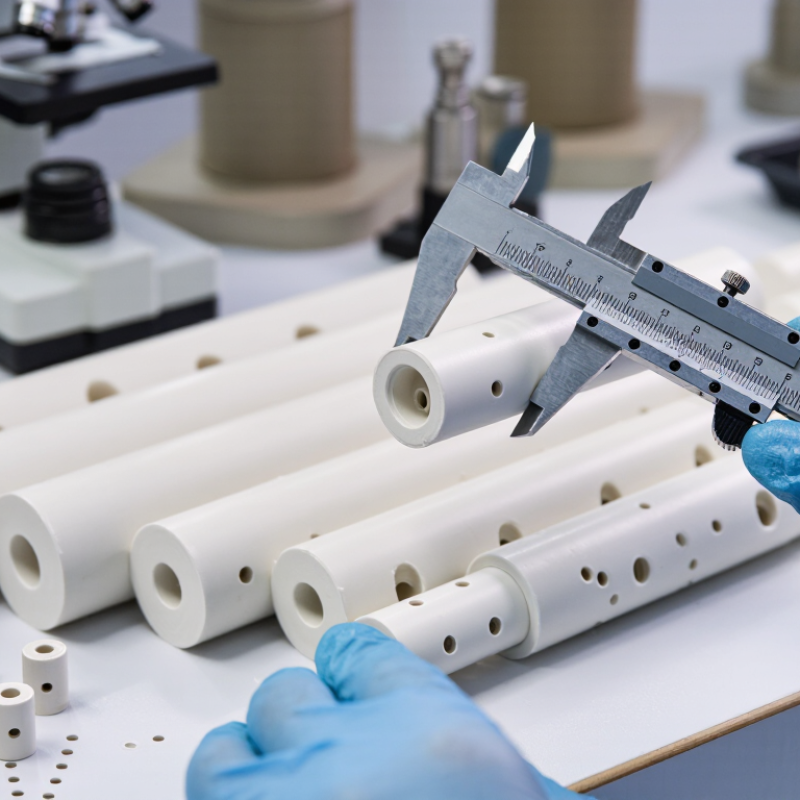
Ceramic Rod Materials: 95–99.9% Alumina, Zirconia, and Silicon Nitride Grades
Top Ceramic Rod Manufacturers and Suppliers Worldwide
Ceramic rod selection begins with material grade, not the supplier’s catalog image. Alumina between 95% and 99.9% offers strong electrical insulation, wear resistance, and stable performance at elevated temperatures. The higher-purity grades usually contain fewer glassy phases, but they can cost more and require tighter processing control. A 95% alumina rod may suit furnace supports, guides, and insulating spacers. A 99.9% grade is more suitable for demanding laboratory and semiconductor equipment.
Zirconia provides high fracture toughness and better resistance to sudden impact than most alumina grades. It is useful for precision plungers, grinding components, and wear-resistant fixtures. However, its performance depends on stabilizer content and thermal conditions. Silicon nitride rods combine low density, strong thermal-shock resistance, and good mechanical strength. Engineers often consider them for high-speed bearings, furnace parts, and demanding structural supports. They are not automatically the best choice. Surface finish and machining quality can change service life significantly.
Reliable worldwide suppliers should provide a material certificate, density data, dimensional tolerances, and test methods. Ask how rods are ground, inspected, and packaged for shipment. A diameter variation of a few hundredths of a millimeter may matter in a tight assembly. Some specifications look excellent on paper, yet omit edge chipping limits. That omission deserves attention. I have found that sample testing under actual temperature cycles reveals weaknesses that room-temperature checks miss. A practical review should compare purity, porosity, hardness, thermal expansion, strength, and lead time before approving a production order.
Performance Standards: 1,500°C+ Service Temperatures and ASTM Testing
At 1,500°C and above, a ceramic rod is not merely a spacer. It becomes a load-bearing, chemically exposed component. The U.S. Department of Energy’s Industrial Decarbonization Roadmap reports that process heat consumes about 51% of onsite manufacturing energy. The IEA’s Energy Technology Perspectives 2024 also places industry near 37% of global final energy demand. Small defects matter.
Reliable suppliers should report continuous service temperature, peak exposure, thermal-shock limits, and dimensional tolerances. ASTM C1161 supports flexural-strength testing, while ASTM C1421 evaluates fracture toughness. ASTM C1525 can help assess thermal-shock resistance. These methods improve comparability, but they do not guarantee performance inside every furnace. Test conditions still matter.
For alumina and mullite rods, engineers should review purity, porosity, grain structure, and coefficient of thermal expansion. A 1,500°C label may describe brief exposure, not continuous loading. That distinction is often missed. A rod measuring 10 millimeters in diameter can warp or crack when temperature gradients develop across a short span. I would request batch-level test records, not only a polished datasheet. Even then, one uncertainty remains: real furnace atmospheres, mounting pressure, and repeated cycling can produce results that laboratory testing does not fully predict.
Global Manufacturer Profiles: Production Scale, ISO 9001, and Export Coverage
Global ceramic rod suppliers differ sharply in production scale. Some operate compact machining lines for custom batches. Others run continuous sintering, grinding, and inspection across multiple facilities. Production capacity should be checked against rod dimensions, tolerance, and monthly demand. A large annual figure can hide limited capacity for thin, high-purity parts. Ask for sample schedules, furnace capacity, and recent lead-time records. Practical buyers should inspect how raw powder is stored. Moisture control matters before pressing and sintering.
ISO 9001 certification offers a useful quality framework, not an automatic guarantee. Verify the certificate scope, issuing body, and expiration date. Request inspection records for diameter, straightness, surface finish, density, and electrical performance. Export coverage also needs detail. A supplier may serve many countries through distributors but manage only a few direct shipments. Check packaging methods, export documents, pallet protection, and experience with fragile ceramics. Production teams with technical sales support often resolve drawings faster. Still, communication can fail when tolerances are translated casually. Use controlled drawings and written approval. One overlooked point is after-sales traceability. Batch codes, retained samples, and corrective-action reports reveal how seriously a manufacturer handles defects. No supplier is flawless. Even an experienced factory may struggle with unusual geometry or sudden order increases. Comparing verified evidence, rather than polished claims, gives procurement teams a more dependable view of global capability.
Supplier Comparison: Tolerances, Rod Diameters, MOQ, Lead Times, and Pricing
A credible ceramic rod comparison should separate standard stock from engineered parts. Grand View Research estimates the global advanced ceramics market at about USD 89 billion in 2023, with continued growth through 2030. However, market reports rarely disclose supplier-level tolerances or minimum order quantities. Buyers should request drawings, inspection methods, and material certificates.
For alumina rods, common stock diameters range from 1 to 50 mm. Standard dimensional tolerance may fall near ±0.1 mm, while precision grinding can reach ±0.01 mm or tighter. Zirconia rods usually cost more because machining and finishing require greater control. Typical prototype MOQs range from 10 to 100 pieces. Production orders may require 500 pieces or more. Lead times often run from two to six weeks for standard sizes, and six to twelve weeks for custom grinding.
Indicative pricing from recent industrial sourcing benchmarks places small alumina rods near USD 2–8 each. Tight-tolerance or zirconia rods may reach USD 15–60 each. These figures exclude tooling, testing, packaging, and shipping. ASTM and ISO material standards improve comparability, but they do not guarantee identical performance between suppliers. That distinction matters. A low quote may hide diameter variation, extra inspection fees, or weak batch traceability. I would treat any price without a tolerance table as incomplete.
Key Applications: Electrical Insulation, Furnace Components, and Wear Systems
Ceramic rod manufacturers and suppliers worldwide support industries that need stable performance under heat, voltage, and abrasion. The most suitable material depends on the working environment. Alumina offers strong electrical insulation and reliable hardness. Zirconia provides higher fracture toughness in demanding mechanical conditions. Steatite can serve lower-cost insulating applications, but its limits require careful review. Small flaws matter.
In electrical systems, ceramic rods separate conductive parts inside heaters, switchgear, sensors, and high-voltage assemblies. Engineers should check dielectric strength, moisture absorption, surface finish, and dimensional tolerance. A rod may look perfect, yet a rough surface can increase tracking risk. Experienced suppliers provide inspection records, material data, and traceable batch information. These details improve confidence during qualification and maintenance.
Furnace components often use rods as supports, guides, spacers, or protection elements near extreme temperatures. Thermal shock resistance matters when parts move between heating and cooling zones. In wear systems, ceramic rods can guide wires, position components, or reduce contact with abrasive materials. Their hardness helps, but brittleness remains a practical weakness. Poor alignment may cause chipping, even with premium ceramics. Procurement teams should compare load, temperature, chemical exposure, and machining quality rather than choosing by price alone. Samples and application testing reveal problems that catalog specifications may miss.
| Ceramic Rod Type | Typical Composition | Typical Maximum Continuous Use Temperature | Key Performance Characteristics | Electrical Insulation Applications | Furnace and Thermal Applications | Wear-System Applications |
|---|---|---|---|---|---|---|
| High-Alumina Rod | Approximately 95–99.8% aluminum oxide (Al₂O₃) | Approximately 1,500–1,800°C, depending on grade, load, atmosphere, and geometry | High hardness, strong electrical insulation, low dielectric loss, good chemical stability, and low thermal expansion | Insulating spacers Terminal supports High-voltage standoffs Sensor supports | Heating-element supports Thermocouple protection Kiln fixtures Furnace feedthroughs | Abrasive guides Ceramic shafts Valve components |
| Zirconia Rod | Stabilized zirconium dioxide, commonly with yttria, magnesia, or calcia | Approximately 1,000–1,500°C, depending on stabilizer, mechanical load, and thermal cycling | Very high fracture toughness compared with most technical ceramics, high hardness, low thermal conductivity, and strong wear resistance | Insulating probes Precision supports Electrical connector components | Molten-metal handling parts High-temperature tooling Thermal-barrier components | Seal faces Pump plungers Bearing elements Cutting and forming tools |
| Steatite Rod | Magnesium silicate ceramic, principally based on MgSiO₃ phases | Approximately 1,000–1,200°C | Good dielectric properties, low moisture absorption, relatively low cost, and favorable machinability before final firing | Low- and medium-voltage insulators Coil supports Terminal blocks Switchgear components | Heating supports Kiln furniture Thermal spacers | Light-duty guides Wear spacers Electrical-mechanical supports |
| Mullite Rod | Aluminosilicate ceramic, commonly within the 3Al₂O₃·2SiO₂ composition range | Approximately 1,400–1,600°C | Low thermal expansion, good thermal-shock resistance, high-temperature stability, and resistance to many furnace atmospheres | High-temperature insulators Thermocouple supports Electrical feedthrough parts | Kiln supports Furnace setters Heating-element holders Combustion fixtures | High-temperature guides Kiln rollers Abrasion-resistant supports |
| Silicon Nitride Rod | Silicon nitride (Si₃N₄), commonly reaction-bonded, pressureless-sintered, or hot-pressed | Approximately 1,000–1,400°C in air; application limits vary significantly with grade and atmosphere | High strength, excellent thermal-shock resistance, low density, strong wear resistance, and good resistance to molten nonferrous metals | Electrical sensor supports High-temperature insulating components Plasma and semiconductor fixtures | Thermocouple protection Aluminum-processing components Furnace rollers Burner parts | Bearings Pump components Cutting tools High-speed wear parts |
| Fused Silica Rod | Amorphous silicon dioxide (SiO₂), generally above 99.9% for technical grades | Approximately 1,000–1,100°C for continuous service; short-term limits can be higher under controlled conditions | Very low thermal expansion, excellent thermal-shock resistance, high optical transmission in selected grades, and good chemical purity | High-purity insulators Lamp components Laboratory supports Electrical test fixtures | Furnace tubes Quartzware supports Semiconductor processing fixtures Thermal-shock tooling | Light-duty guides Noncontaminating process supports Laboratory wear components |
| Cordierite Rod | Magnesium aluminosilicate ceramic, commonly based on 2MgO·2Al₂O₃·5SiO₂ | Approximately 1,000–1,200°C, depending on porosity, grade, and thermal cycling | Very low thermal expansion, good thermal-shock resistance, low density, and useful insulating performance | Electrical spacers Sensor holders Insulating supports | Kiln furniture Catalyst-support structures Heat-exchanger components Furnace trays | Low-load guides Thermal-cycle fixtures Process supports |
| Zircon Rod | Zirconium silicate (ZrSiO₄), naturally occurring or refined technical ceramic | Approximately 1,400–1,600°C, subject to decomposition, atmosphere, and mechanical loading | High refractoriness, good resistance to molten glass and slags, low thermal expansion, and good abrasion resistance | Insulating furnace supports Electrical-ceramic tooling High-temperature spacers | Glass-contact components Foundry tooling Refractory supports Kiln components | Slurry-resistant parts Abrasive guides Foundry wear components |
Note: Temperature ranges and performance descriptions are typical engineering values for dense technical ceramics. Actual limits depend on purity, porosity, dimensions, surface finish, thermal gradients, atmosphere, applied load, and the specific manufacturing process.