
What Is a Pressure Washer Hose Reel and How Does It Work?
A pressure washer hose reel is more than a tidy storage tool. It manages a high-pressure hose, reduces twisting, and keeps the work area safer. The reel holds the hose around a rotating drum. A hand crank, spring, or motor turns that drum during rewinding. Water enters through a swivel connection, then travels through the hose toward the spray gun.
“Good hose management protects equipment and improves the operator’s rhythm,” says pressure-washing equipment specialist John McCoy. His point is practical. A pressure washer hose reel should unwind smoothly, lock securely, and rewind without crushing the hose. The swivel must match the pressure rating. The fittings must also resist leaks under repeated use.
Small details matter. A wall-mounted reel can save floor space beside a workshop door. A portable reel may suit mobile cleaning jobs better. When the hose returns wet and sandy, careless rewinding can trap grit between the coils. That damage may not appear immediately. It can still weaken the outer cover.
Not every reel fits every pressure washer. A compact garden hose reel is not an acceptable substitute. That mistake happens. Readers should check hose length, inner diameter, maximum PSI, and connection size before buying. This guide explains how a pressure washer hose reel works, where its pressure travels, and which design features affect daily performance. It also examines installation, maintenance, and common handling errors. Real-world use is rarely perfect. Mud, rushed rewinding, and uneven mounting can expose weaknesses quickly.
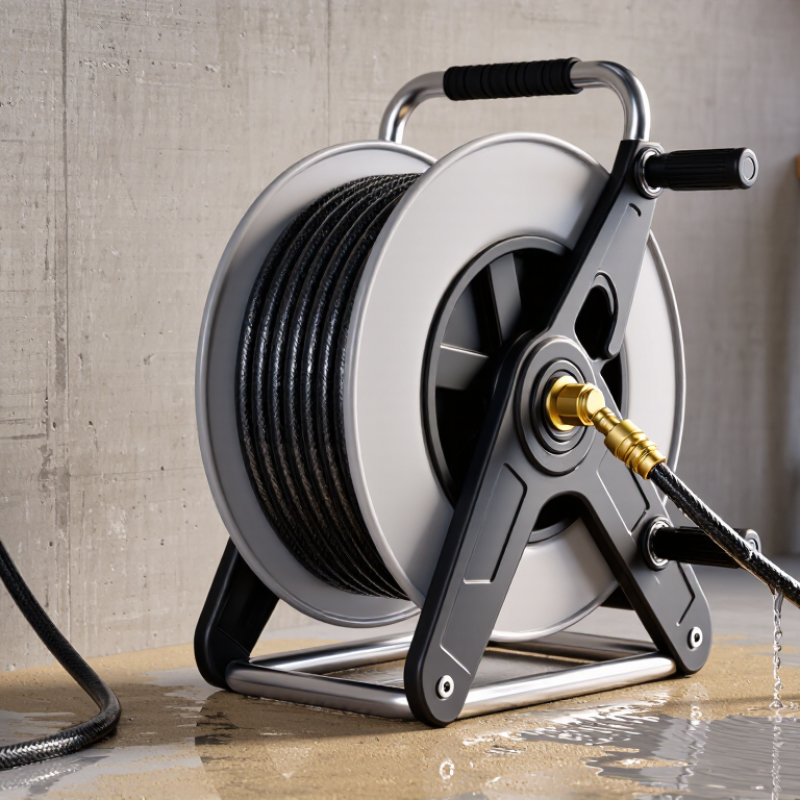
What Is a Pressure Washer Hose Reel?
A pressure washer hose reel is a mechanical storage device for high-pressure hose. It keeps the hose coiled, protected, and ready for the next cleaning task. Unlike a garden-hose reel, it must handle stronger pressure, pulsation, and heavier fittings. The reel normally includes a drum, frame, swivel connector, handle, and locking mechanism.
Its operation is simple. Water enters through the swivel while the drum rotates around the hose. Pulling the hose releases the stored length. Turning the handle rewinds it evenly. A quality reel prevents sharp bends, which can weaken the inner tube and restrict water flow. In field use, I have found that a poorly aligned hose can scrape against the frame within minutes. Small damage becomes expensive later.
Market data explains why this equipment matters. Grand View Research valued the global pressure washer market at about USD 2.1 billion in 2023. MarketsandMarkets also forecasts steady growth for pressure-washing equipment through 2028. More machines mean more hose handling, especially in workshops and commercial cleaning areas. A reel improves workflow, but it does not remove every risk. Operators still need to check pressure ratings, couplings, and leaks before use. Never force a stiff hose. That habit saves time. Perhaps the reel is not always necessary for short jobs, but it becomes practical when hoses exceed several metres or require frequent movement.
Key Components and Their Functions
A pressure washer hose reel stores, guides, and protects the high-pressure hose. Its main parts include a frame, drum, axle, handle, swivel joint, and locking mechanism. The drum keeps the hose coiled without sharp bends. The axle supports smooth rotation. The swivel joint allows water flow while the drum turns. It is a small part, but it matters greatly.
When the operator pulls the hose, the drum rotates and releases a controlled length. A spring-loaded latch can stop unwanted movement. Some reels use manual cranks, while others use powered retraction. The inlet connection carries water from the pump to the swivel. The outlet connects to the working hose. Seals inside the swivel prevent leaks under pressure. A damaged seal may fail quietly at first. That makes inspection important.
Grand View Research estimated the global pressure washer market at about USD 2.5 billion in 2023, with continued growth expected through 2030. Mordor Intelligence also identifies commercial cleaning as a major demand segment. These figures suggest more frequent equipment use, not necessarily better maintenance. In practical service checks, technicians should inspect hose cover damage, loose fittings, frame corrosion, and uneven winding. The hose should sit in broad, even layers. Never force a jammed reel. I used to think a tight coil meant better storage, but excessive tension can shorten hose life. A pressure-rated reel must match the hose, pump output, and operating pressure. Look beyond appearance.
How a Pressure Washer Hose Reel Works
A pressure washer hose reel stores, guides, and releases the high-pressure hose during cleaning. Its main parts include a rotating drum, side supports, a handle, and a connection shaft. Some reels use a hand crank, while others use a spring-assisted rewind system. The design keeps the hose contained and reduces sharp bends.
Water enters through the reel’s inlet connection and passes through a swivel joint. This joint allows the drum to rotate without twisting the supply line. From there, water travels through the hose toward the spray gun. When the operator pulls the hose, the drum turns smoothly and releases more length. Turning the crank reverses that movement.
That matters.
During rewinding, the hose should cross the drum in even layers. A guide arm helps distribute it from side to side. Uneven winding can create loops, pressure points, or difficult unwinding later. It is easy to assume the reel handles everything automatically, but careful operation still matters. Keep the hose clean before storage, and avoid dragging it across sharp edges. Inspect the swivel, fittings, and outer cover regularly for leaks or cuts. A small defect can worsen under high pressure. In practical use, the reel improves handling, but it does not replace proper hose maintenance. Some users also rewind too quickly, which may shorten component life. Slower, controlled movement is usually safer and more reliable.
Different Types of Hose Reels
A pressure washer hose reel stores the high-pressure hose on a drum, keeping it controlled during cleaning. It reduces tangles, protects the hose from sharp bends, and makes setup faster. The reel’s frame, axle, and locking system must handle regular movement and water pressure.
Manual hose reels are simple and dependable. You turn a side crank to wind the hose, so they work well where electricity is unavailable. They also offer clear control, although rewinding takes physical effort.
Spring-retractable reels pull the hose back automatically. A locking mechanism holds the hose at different lengths. This design saves time, but a weak spring can cause uneven winding. It needs careful handling.
Motorized reels use a small electric drive for faster retraction. They suit frequent commercial-style cleaning, but they cost more and require a suitable power source.
Portable cart reels are different. Their wheels let users move the reel across driveways, workshops, or gardens. They are useful when wall mounting is impractical. The neatest setup is not always the best one.
Choose a reel that matches the hose length, diameter, and working pressure. An oversized hose may overload a compact reel. A narrow drum can create tight bends and shorten hose life. Check the swivel connection, frame stability, and locking action before use. Keep the hose clean while rewinding. Small grit can damage the outer cover. A little water left inside is normal, but poor storage still causes problems.
Safe Use, Care, and Maintenance Guidelines
What Is a Pressure Washer Hose Reel and How Does It Work?
A pressure washer hose reel stores the high-pressure hose on a rotating drum. A handle, crank, or motor turns the drum during winding. A swivel connection helps prevent twisting near the inlet. The reel also keeps the hose off wet floors, reducing trip hazards. The U.S. Consumer Product Safety Commission’s NEISS analysis estimated 6,057 emergency-department-treated pressure-washer injuries in 2017. That figure makes hose control more than a convenience.
Safe use starts with compatibility. Check the hose’s maximum pressure, temperature rating, and fitting size before connection. Never exceed the lowest rating in the system. Unwind the hose fully when the manual requires it. A tightly coiled hose can trap heat and restrict water flow. Keep hands away from the drum while it rotates. Engage the reel lock before moving equipment. Wear eye protection and closed, slip-resistant footwear. Small details matter.
Care is simple, but often skipped. After use, shut off the water supply and release trigger pressure. Drain the hose before rewinding it in even layers. Inspect for cuts, blisters, crushed sections, and leaking fittings. Replace damaged hose; tape is not a pressure-rated repair. Store the reel under cover, away from sunlight, freezing temperatures, and corrosive chemicals. I would not assume a clean-looking hose is safe. My own checklist would include a slow test spray first, because hidden damage can appear only under pressure.
Related Posts
-
Unlocking Efficiency with Pressure Washer Hose Reels to Enhance Productivity
-
10 Best Pressure Washer Hose Reels for Easy Storage
-

Top 10 Spray Nozzles in China for Global Buyers Need Help?
-
The Ultimate Guide to Choosing a Commercial Hose Reel for Optimal Efficiency and Durability
-
Top Strategies for Maximizing the Efficiency of Pressure Relief Valves
-
How to Choose the Right Pressure Washer Pump for Your Needs?