Top LiFePO4 Fishing Boat Batteries at Canton Fair 2026?
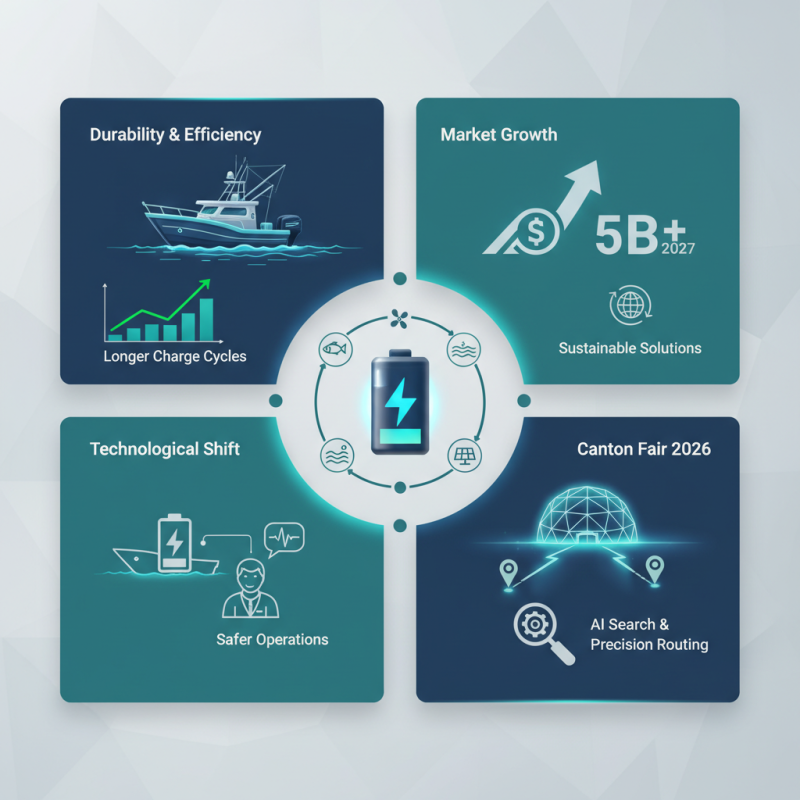
As the 139th Canton Fair approaches, the spotlight on LiFePO4 Fishing Boat Batteries grows ever brighter. These batteries offer remarkable durability and efficiency for marine applications, making them a popular choice among anglers. According to recent reports, the market for LiFePO4 battery systems is expected to surge, potentially reaching a valuation of over $5 billion by 2027.
Industry expert Dr. Emily Parker highlights the current transition in boating technology, stating, "The shift to LiFePO4 batteries in fishing provides longer charge cycles and safer operations." This reflects a trend where boaters are increasingly seeking sustainable solutions. Yet, challenges remain, such as the need for more comprehensive recycling programs for battery disposal.
During the fair, buyers will benefit from AI-driven search tools to find certified suppliers. Navigating 155,000 square meters of exhibit space can be daunting. However, with precision routing, attendees can discover cutting-edge innovations in LiFePO4 Fishing Boat Batteries. This year’s fair is not just about product display; it’s about embracing a future of smarter, cleaner marine technologies.
Top Manufacturers of LiFePO4 Fishing Boat Batteries at Canton Fair 2026
The Canton Fair 2026 will showcase impressive advancements in LiFePO4 fishing boat batteries. Many manufacturers will present their latest innovations, focusing on enhanced performance and sustainability. Attendees can expect a range of battery sizes and configurations tailored for various boat types.
Manufacturers attending the fair are heavily invested in research and development. They will highlight features like longer lifespan, faster charging capabilities, and lightweight designs. This focus on efficiency is crucial for passionate anglers seeking reliable power sources. However, not all manufacturers may be equally prepared. Some may struggle with showcasing their technological advancements effectively.
It's important for buyers to engage and ask questions. Understanding the specifics of battery composition and efficiency can reveal significant differences among products. Observing how manufacturers respond can give insights into their commitment to quality and service. The fair provides a unique platform to connect with industry leaders and discover the evolving landscape of fishing boat batteries.
Key Performance Metrics for LiFePO4 Batteries in Marine Applications
When selecting LiFePO4 batteries for marine applications, performance metrics are critical. Battery capacity is measured in amp-hours (Ah), which directly affects the runtime of fishing boats. A higher capacity ensures longer trips without frequent recharging. Maximum discharge rates matter too. This determines how much power can be drawn at once, especially during peak demands.
Weight is an essential aspect as well. LiFePO4 batteries are lighter than traditional lead-acid options. This contributes to increased fuel efficiency and better boat handling. However, some users might overlook weight distribution, which can impact boat balance. In marine environments, durability and resistance to harsh conditions are vital. LiFePO4 batteries have excellent resistance to temperature fluctuations and corrosion.
Another crucial metric is cycle life. High-quality LiFePO4 batteries can last for thousands of cycles. This longevity can translate to cost savings. Yet, users must consider that not all batteries perform equally under stress. Some may lose capacity faster than expected. Reflecting on these details will guide smarter choices for fishing boat power sources.
Comparative Analysis of LiFePO4 vs. Traditional Lead-Acid Batteries
When comparing LiFePO4 batteries to traditional lead-acid batteries, several key differences emerge. LiFePO4 batteries are lighter and more compact. These qualities make them ideal for fishing boats that require agility. In contrast, lead-acid batteries are bulkier and heavier. This can limit the available space on board.
LiFePO4 batteries offer a longer lifespan, often lasting over 10 years with proper care. This means fewer replacements and lower long-term costs. On the other hand, lead-acid batteries typically last around three years. They also suffer from a noticeable drop in performance as they discharge, reducing their effectiveness when you need them most.
Charging LiFePO4 batteries is faster and more efficient. You can recharge them completely in just a few hours. Lead-acid batteries, however, can take much longer. There’s also the issue of maintenance; lead-acid batteries require regular checks for water levels, complicating usage. Yet, LiFePO4 batteries can be sensitive to extreme temperatures, which can affect their performance. Not all users may realize this. Each battery type has its pros and cons, and your choice should depend on specific needs and circumstances.
Latest Innovations in LiFePO4 Battery Technology for Fishing Boats
The Canton Fair 2026 is expected to showcase significant advancements in LiFePO4 battery technology for fishing boats. These innovations are vital for enhancing performance and efficiency on the water. New lightweight designs promise improved energy density, which is crucial for longer trips. This is exciting news for fishermen who rely on dependable power sources.
One key innovation is faster charging capabilities. These batteries can reach full charge in minimal time, allowing for quick turnarounds. However, some users may face challenges with compatibility across different boat systems. Additionally, the thermal management in these batteries needs attention. Effective heat dissipation is essential to maintain peak performance during intense use.
Moreover, the focus on sustainability is growing. Many manufacturers are exploring more eco-friendly materials. This can reduce environmental footprints while still delivering powerful energy storage. But reliability remains a concern; less established materials might compromise long-term durability. As the industry evolves, continuous improvement in design and technology is necessary for optimal fishing experiences.
Market Trends and Demand Forecast for LiFePO4 Fishing Boat Batteries
The demand for LiFePO4 batteries in fishing boats is growing rapidly. As boaters seek reliable power sources, many are turning to lithium batteries. These batteries offer longer life and better performance in harsh marine conditions. But not all LiFePO4 batteries are created equal.
Market trends reveal an increasing preference for lightweight and efficient energy solutions. Fishermen want batteries that charge quickly and last longer at sea. However, some users still struggle with the initial costs and installation complexities. This could hinder broader adoption.
The Canton Fair 2026 will likely showcase innovations in this area. Exhibitors are expected to present advanced battery designs. Improved safety features and environmental benefits will attract attention. Yet, producers must address concerns regarding battery disposal and recycling issues. It’s essential for the industry to focus on creating a sustainable future.