How HVLS Fans Improve Efficiency in Adidas Warehouses?
In today's competitive landscape, efficiency is crucial for companies like Adidas. The implementation of HVLS Fans in Adidas Warehouse plays a significant role in enhancing operational effectiveness. These fans are designed to circulate large volumes of air, creating a comfortable working environment. They help in maintaining consistent temperatures, reducing energy costs.
The use of HVLS Fans also affects employee productivity. A well-ventilated warehouse ensures that workers can perform their tasks efficiently. Sweaty, stuffy conditions can lead to decreased focus and fatigue. However, even with these benefits, some challenges remain.
For instance, the initial setup cost can be a concern for large companies. There is also the need for regular maintenance to ensure optimal performance. Nonetheless, the advantages of HVLS Fans in Adidas Warehouse cannot be ignored. By continuously evaluating their impact, Adidas can refine their use and maximize efficiency.
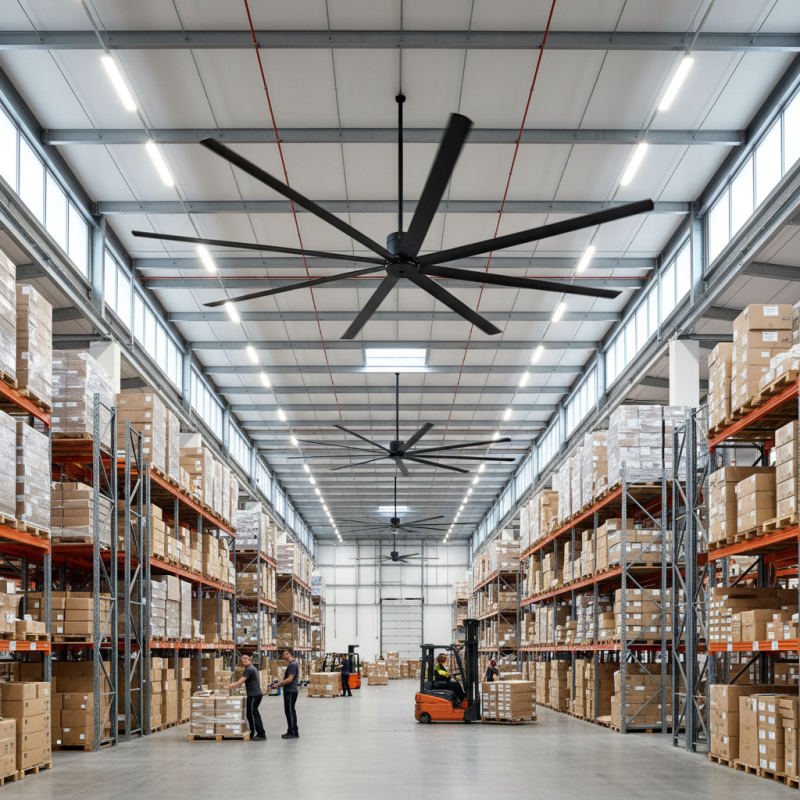
Impact of HVLS Fans on Warehouse Temperature Control
In modern warehouse operations, temperature control is critical for efficiency. HVLS fans can significantly enhance this aspect. These fans move large volumes of air at low speeds. They create a more even temperature distribution throughout the space. According to a report by the American Society of Heating, Refrigerating and Air-Conditioning Engineers (ASHRAE), poorly distributed air can lead to temperature variations of up to 10°F in large areas. This can affect both product quality and worker comfort.
HVLS fans can lower energy costs by improving HVAC efficiency. By circulating air, they help maintain optimal temperatures, reducing the workload on heating and cooling systems. A study from the U.S. Department of Energy found that effective air circulation can lead to energy savings of 30% or more in commercial spaces. However, relying solely on fans without proper insulation or sealing might not yield the best results. Buildings must be properly optimized first for these systems to be truly effective.
In addition, while HVLS fans improve airflow, they also require careful placement and installation. Misalignment can cause drafts, leading to discomfort for workers. Utilizing user feedback to adjust fan placements can enhance their effectiveness. A technical analysis from the Industrial Fan and Blower Association also highlights that the right fan size is crucial for achieving optimal airflow. Therefore, awareness of these factors is essential for maximizing the benefits of HVLS fans in warehouse environments.
Reduction in Energy Costs with HVLS Fans
HVLS fans have become a game-changer in warehouse environments, particularly regarding energy efficiency. Studies indicate that HVLS fans can reduce energy costs by up to 30%. According to the U.S. Department of Energy, improving airflow in large spaces can significantly cut down on HVAC system workload. Greater airflow tends to create even temperature distributions, diminishing the need for excessive heating or cooling.
Implementing HVLS fans optimizes existing HVAC systems. Data from industry reports suggest that they balance thermal conditions more effectively. With a better climate, businesses can expect enhanced worker productivity and fewer complaints about uncomfortable temperatures. These benefits translate into a more focused workforce and ultimately better performance metrics.
However, there are challenges. Some warehouses initially face resistance to change. Not all staff recognize the long-term savings. Additionally, the upfront installation cost can deter some operations. It's crucial to consider these factors to evaluate the true benefits. Understanding that immediate gains might not come can help in making informed decisions. Maintaining an effective environment is an ongoing journey, not just a one-time fix.
Enhancement of Worker Comfort in Adidas Warehouses
In large warehouses, worker comfort is crucial for efficiency. High-volume, low-speed (HVLS) fans significantly enhance the work environment. They create a gentle breeze that helps regulate temperature. This is vital during hot days when conditions can become unbearable. Employees report feeling more comfortable and focused when air circulation improves.
When integrating HVLS fans, it’s essential to consider placement. Positioning fans strategically can optimize airflow. This reduces hot spots and increases comfort levels across the workspace. Each area may require different fan placements. Regular maintenance is also a factor. Clean fans run more efficiently and maintain overall air quality.
Tip: Encourage worker feedback about comfort levels. This input can guide adjustments in fan usage. It's important to remember that not all solutions fit every space. Experimenting with different configurations may lead to better outcomes over time.
Improvement in Inventory Management through Better Airflow
Efficient inventory management is crucial for any warehouse. Good airflow plays a significant role in this. By improving air circulation, HVLS fans help maintain optimal temperature. This reduces product degradation and enhances overall storage conditions. When temperatures are stable, it becomes easier to track inventory accurately.
A few tips can help improve airflow in warehouses. Position fans strategically to maximize coverage. Ensure that air circulates across all areas, especially around high-value items. Regular maintenance of fans is also vital. Clean them to prevent dust buildup, which can obstruct airflow and reduce efficiency.
Improving airflow can reveal hidden inventory issues. Items may become less accessible if airflow isn’t uniform. Rethink shelving arrangements if certain areas remain stagnant. Monitoring air patterns can lead to better space utilization and more organized stock placement. Being proactive about airflow can create a more efficient inventory management system.
Sustainability Benefits of Using HVLS Fans in Logistics Operations
Sustainability is a growing concern in logistics operations. HVLS fans offer a practical solution to enhance energy efficiency. These fans utilize large blades to circulate air effectively, reducing the need for air conditioning. This leads to a significant decrease in energy consumption. As warehouses operate for long hours, every bit of efficiency counts.
In addition to energy savings, HVLS fans help maintain consistent temperatures. A stable environment is crucial for safety and productivity. Workers feel more comfortable, which can lead to higher morale. However, not all facilities adopt this technology. Some may overlook the long-term benefits in favor of short-term savings. This may require reflection on future operational strategies.
Using HVLS fans also reduces carbon footprints. Less energy use translates directly to fewer emissions. Companies can showcase their commitment to sustainability. Yet, the initial investment in these systems can be a challenge. Facilities should weigh costs against potential savings. This creates an opportunity for critical discussions on sustainable practices.