
How to Choose a Nylon Flat Transmission Belt?
Choosing a Nylon Flat Transmission Belt is a practical engineering decision, not a simple material preference. The belt must transfer power reliably while handling tension, friction, temperature, and repeated bending. A production line may look calm, yet its belt can flex thousands of times each hour. Small selection errors often become visible through noise, slippage, edge wear, or unexpected downtime.
Industry data supports this careful approach. Grand View Research’s Conveyor Belt Market report identifies manufacturing, logistics, and material handling as major demand areas for belt systems. These sectors increasingly require stable operation, lower maintenance, and improved energy efficiency. The U.S. Department of Energy also emphasizes that motor-driven systems can represent a significant share of industrial electricity consumption. Belt alignment and tension therefore influence more than mechanical performance. They can affect operating costs.
A suitable Nylon Flat Transmission Belt should match the pulley diameter, transmitted load, speed, surface conditions, and installation environment. Nylon offers strong tensile performance and useful flexibility, but it is not automatically the best choice for every application. Moisture, chemical exposure, heat, and poor tracking can reduce service life. That part is easy to underestimate. ISO belt terminology and manufacturer test data can support a more reliable comparison, especially for tensile strength, elongation, friction, and dimensional stability. Still, catalog figures do not replace field experience. Real installations contain dust, vibration, imperfect alignment, and changing loads. This guide examines those factors and provides a clearer method for choosing the right belt, while acknowledging that no selection is entirely risk-free.
What Is a Nylon Flat Transmission Belt?
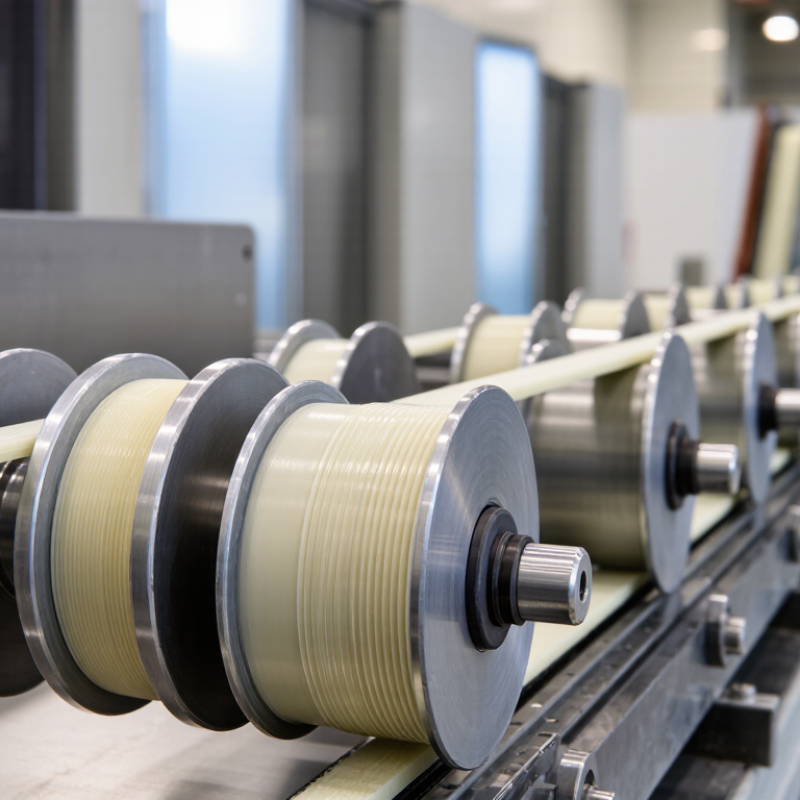
A nylon flat transmission belt is a flexible, friction-driven belt with a woven nylon tensile layer. It usually has rubber, polyurethane, or leather coverings. It is not a toothed belt. Power moves through contact between the belt and pulley surfaces, so correct tension matters greatly.
Nylon provides high tensile strength, light weight, and good flexibility around smaller pulleys. It also tolerates repeated bending in many industrial drives. However, nylon absorbs moisture, which can slightly change its length and stiffness. A belt running near a hot motor may also lose tension faster than expected. Check the pulley crown, belt tracking, surface wear, and alignment before selecting a replacement. A common inspection mistake is measuring only belt width. Thickness, joining method, operating speed, and transmitted load are equally important.
The U.S. Department of Energy’s Industrial Motor Systems Market Assessment reports that motor-driven systems consume about 68% of electricity used in U.S. manufacturing. That figure shows why small transmission losses deserve attention. A poorly tensioned belt can slip, generate heat, and leave black dust around the pulley. Nylon is not automatically the best choice. Wet rooms, abrasive dust, high temperatures, and frequent starts may require a different cover or construction. ISO 1081:2013 provides standardized terminology for belt-drive components, helping engineers describe pulley, belt, and tension conditions consistently. Specification sheets still need careful review.
Which Operating Requirements Should You Identify First?
How to Choose a Nylon Flat Transmission Belt?
Which Operating Requirements Should You Identify First?
Before choosing a nylon flat transmission belt, define the machine’s actual working conditions. Belt width and strength depend on transmitted power, rotational speed, and expected load. A belt running at 1,500 revolutions per minute may need different construction than one carrying intermittent shock loads.
Measure the smallest pulley diameter carefully. A narrow pulley can force excessive bending and shorten belt life. Check the center distance, pulley alignment, and available tensioning range. Poor alignment often creates edge wear before the belt appears damaged. It is an easy detail to overlook.
Temperature and moisture also matter. Heat can affect flexibility, while oil, dust, or water may change surface grip. Record the operating temperature, cleaning method, and surrounding contaminants. If the belt runs near heated rollers, allow a practical safety margin instead of selecting the minimum rated material.
The joining method deserves attention. Endless joining may suit continuous production, while a detachable fastener can simplify maintenance. However, the joint must pass over every pulley smoothly. It should not create vibration or uneven tracking.
Ask how often the machine starts, stops, reverses, or overloads. Continuous motion is easier to predict. Real machines are less polite. Finally, compare the collected data with verified technical tables, installation guidance, and calculated tension limits. A previous belt size is useful evidence, but it is not always the correct answer.
How Do You Select the Right Belt Material and Dimensions?
How to Choose a Nylon Flat Transmission Belt?
Selecting the right nylon flat transmission belt starts with the working conditions, not the catalog photo. Nylon suits applications needing flexibility, high tensile strength, and stable performance at moderate or high speeds. However, the belt’s surface coating also matters. Rubber can improve grip, while polyurethane may resist oils, moisture, and abrasion more effectively. Check the actual environment before choosing.
Measure the belt width, thickness, pulley diameter, and center distance carefully. A wider belt can transmit more power, but excessive width may increase tracking problems. Thickness affects flexibility and bending stress around small pulleys. The first estimate is often wrong. Recheck the pulley alignment, shaft spacing, and required tension under operating conditions. If the belt runs continuously, calculate the duty cycle and allow a safety margin rather than selecting the minimum strength.
Tips: Use the largest practical pulley diameter. It reduces repeated bending and can extend belt life. Keep the belt clean and inspect edge wear, surface glazing, and stretching. A simple measurement log helps prevent ordering errors. Do not rely only on nominal dimensions; actual belt thickness can vary slightly. If the application includes heat, chemicals, or heavy shock loads, confirm material compatibility with a qualified belt engineer.
How to Choose a Nylon Flat Transmission Belt?
Select the belt thickness and pulley size together. The chart uses a practical design guideline of approximately 50 times the belt thickness for the minimum pulley diameter to reduce bending stress in nylon flat belts.
Thicker belts generally carry higher tension, but they require larger pulleys and may be less flexible.
Choose width according to transmitted power, belt speed, tracking stability, and the allowable working tension specified for the belt.
Nylon is commonly selected for its flexibility, abrasion resistance, and good fatigue performance. Moisture and temperature can affect its dimensions and strength.
The plotted pulley diameters are calculated examples based on Dmin ≈ 50 × belt thickness. Final selection should be checked against the belt manufacturer's working-tension, speed, temperature, moisture, and pulley-diameter specifications.
How Can You Compare Belt Performance and Compatibility?
Choosing a nylon flat transmission belt requires more than reading tensile strength on a specification sheet. In field inspections, I compare the belt with the machine’s actual load, speed, and pulley diameter. A strong belt can still fail if it bends around a pulley that is too small. Measure the belt width and thickness carefully. Small errors matter. Check the working tension, not only the breaking tension. This difference protects the belt from fatigue during repeated starts and stops.
Performance comparison should include friction, elongation, tracking, and splice quality. A belt with stable grip transfers power efficiently without excessive pulley pressure. Ask how much it stretches after installation. Frequent retensioning may signal poor compatibility or incorrect tension. Inspect the surface after several operating hours. Shiny patches, edge wear, or cracking reveal problems that a catalog may hide. I once focused too heavily on tensile strength and overlooked tracking. That judgment was incomplete. Alignment deserved equal attention.
Compatibility also depends on temperature, moisture, dust, oil exposure, and cleaning methods. Confirm that the nylon construction suits the operating environment. Check pulley crown, shaft alignment, and available installation space before ordering. Static control may be necessary near sensitive electrical equipment. Request test data under similar load and speed conditions. Then run a controlled trial, measuring temperature, noise, slip, and belt movement. Keep records. A short trial is useful, but it cannot represent every seasonal condition. Review the result with maintenance staff, because operators often notice small changes first.
What Installation and Maintenance Factors Affect Belt Life?
How to Choose a Nylon Flat Transmission Belt?
Choosing a nylon flat transmission belt is not only a width decision. Installation often determines whether the belt survives months or years. Nylon offers high tensile strength, but poor tracking can quickly damage its edges. Choose a belt with a suitable tensile rating, friction surface, and operating temperature. Confirm pulley diameter and tension against the supplier’s technical data. This is where many selections fail.
During installation, align both pulley shafts carefully. Use a straightedge across the pulley faces. Set tension gradually, then rotate the system by hand. Over-tensioning increases bearing loads, while under-tensioning causes slip and heat. The U.S. Department of Energy’s Operations and Maintenance Best Practices Guide reports 8–12% lower costs from predictive maintenance than preventive maintenance. It also estimates 30–40% savings compared with reactive maintenance. These figures support regular condition checks, even for simple belt drives.
Inspect the belt weekly for glazing, frayed edges, cracks, and unusual dust. Check tracking after cleaning, adjustment, or pulley replacement. Keep oil, moisture, and loose debris away from the belt surface. Record tension readings and temperature changes, rather than trusting memory. I have seen belts replaced too early because operators ignored alignment marks. I have also seen good belts fail after one careless adjustment. ISO 17359 recommends structured condition monitoring, but the method must fit the equipment. A small drive may need only visual checks and measured tension. A high-speed drive needs vibration and temperature trends.
How to Choose a Nylon Flat Transmission Belt? - What Installation and Maintenance Factors Affect Belt Life?
| Selection or Maintenance Factor | Why It Matters | Recommended Practice | Typical Risk if Incorrect | Inspection Guidance |
|---|---|---|---|---|
| Operating Load and Power | The belt must transmit the required power without excessive tension, slip, or heat buildup. | Select a belt with sufficient rated power capacity and consider starting loads, shock loads, and duty cycles. | Premature stretching, edge damage, belt slip, or fatigue failure. | Check for slipping, glazing, abnormal noise, and changes in belt tension during operation. |
| Belt Width and Thickness | Width affects load distribution, while thickness influences flexibility, strength, and pulley compatibility. | Match the belt dimensions to the pulley face width, transmitted load, minimum pulley diameter, and equipment layout. | Overloading, tracking problems, excessive bending stress, or contact with guards. | Measure belt width and inspect both edges for uneven wear or fraying. |
| Nylon Fabric Construction | Nylon provides high tensile strength and flexibility; the fabric construction affects stretch, durability, and surface performance. | Choose the construction and surface finish according to the load, speed, pulley size, and required coefficient of friction. | Excessive elongation, poor grip, surface cracking, or reduced service life. | Look for broken fabric, delamination, cracks, and changes in surface texture. |
| Pulley Diameter | Small pulleys impose repeated bending stress on the belt and can accelerate fatigue. | Use pulleys that meet the belt supplier's minimum recommended diameter, especially at high speeds or with thicker belts. | Cracking, ply separation, permanent set, and shortened belt life. | Inspect the belt where it repeatedly bends around the smallest pulley. |
| Center Distance and Belt Length | Incorrect length can prevent correct tensioning and may cause excessive take-up or insufficient adjustment range. | Verify pulley center distance, belt length, and available adjustment before ordering or installing the belt. | Persistent slip, excessive tension, difficult installation, or inability to maintain alignment. | Record the adjustment position and monitor whether the take-up reaches its limit. |
| Initial Tension | Too little tension causes slip; too much tension increases shaft, bearing, and belt loads. | Set tension according to the equipment or belt specification. Do not tighten the belt simply to eliminate all visible slack. | Heat generation, premature elongation, bearing overload, or belt breakage. | Check tension after the initial run-in period and whenever slipping or overheating occurs. |
| Pulley Alignment | Angular or parallel misalignment forces the belt toward one side and concentrates stress at the edges. | Align pulley faces and shafts before tensioning. Use a straightedge or laser alignment tool where appropriate. | Edge wear, tracking instability, fraying, and belt displacement. | Inspect both belt edges and confirm that the belt runs centrally on the pulleys. |
| Pulley Surface Condition | Rough, damaged, contaminated, or worn pulley surfaces can increase abrasion and reduce traction. | Keep pulley surfaces smooth, clean, and free of burrs, oil, grease, and embedded debris. | Abrasion, slipping, surface cuts, and accelerated wear. | Inspect pulleys during belt replacement and remove burrs or damaged components. |
| Operating Speed | Higher speed increases centrifugal effects, bending cycles, heat, and sensitivity to imbalance or misalignment. | Confirm that the belt, pulley, and tracking system are suitable for the actual operating speed. | Vibration, heat buildup, tracking loss, and fatigue damage. | Monitor vibration, temperature, noise, and belt stability at normal production speed. |
| Temperature and Humidity | Extreme heat, cold, moisture, or rapid temperature changes can affect flexibility, adhesion, and dimensional stability. | Select a construction suitable for the working environment and avoid storing belts in direct sunlight, high humidity, or near heat sources. | Hardening, softening, shrinkage, swelling, cracking, or loss of tensile performance. | Check for stiffness, surface cracking, deformation, or changes after environmental exposure. |
| Chemical and Oil Exposure | Some fluids can attack coatings, adhesives, or belt materials, while oil and grease may reduce traction. | Identify all process fluids before selection and clean spills promptly using a method compatible with the belt material. | Swelling, delamination, softening, slipping, or surface deterioration. | Inspect for discoloration, swelling, tackiness, loss of grip, or damaged coatings. |
| Installation Method | Forcing a belt over a pulley or using sharp tools can damage fabric and create hidden weak points. | Release the take-up mechanism, install the belt without prying, and follow the correct tensioning sequence. | Cuts, stretched sections, damaged edges, and early failure during commissioning. | Perform a slow test run and inspect the belt before returning to full production. |
| Routine Cleaning | Dust and product buildup can change friction, increase abrasion, and interfere with tracking. | Clean the belt and pulleys at a frequency based on contamination level and production conditions; avoid unsuitable solvents. | Slip, uneven wear, contamination transfer, and overheating. | Include cleaning in scheduled maintenance and record recurring contamination sources. |
| Safety and Inspection Frequency | Early detection of wear prevents secondary damage to pulleys, shafts, bearings, and surrounding equipment. | Inspect before commissioning, after the initial run-in, and periodically according to operating severity and safety procedures. | Unexpected downtime, equipment damage, and unsafe operating conditions. | Lock out power before close inspection and replace belts showing cracks, exposed fabric, severe edge damage, or abnormal elongation. |