
How to Choose a Holographic Foil Machine?
Choosing the right Holographic Foil Machine affects print quality, production speed, material waste, and long-term operating costs. A machine may look impressive in a showroom, yet perform poorly with your actual foil, paper, film, or packaging designs. Selection should begin with your daily production needs, not attractive specifications.
Start by examining pressure control, heating stability, foil feeding accuracy, and registration performance. These features influence whether holographic patterns align cleanly with logos, text, and fine artwork. Check the machine’s working size and compatible substrates carefully. A model designed for small labels may struggle with larger cartons or continuous production. Ask suppliers for test samples using your materials. Real samples reveal defects that brochures often hide.
Maintenance also deserves attention. Inspect access to heating components, replacement part availability, operator training, and technical support response times. A reliable supplier should explain rated capacity, recommended operating conditions, warranty coverage, and safety procedures clearly. Certifications and documented testing can support confidence, but they should not replace practical verification.
Avoid choosing solely by price.
The cheapest machine may create uneven pressure, excessive foil waste, or repeated downtime. However, higher cost does not automatically guarantee better results. I have seen buyers focus heavily on automation while overlooking setup complexity and local service limitations. That mistake is easy to repeat. A careful comparison should balance output quality, labor requirements, energy use, maintenance demands, and future expansion. This guide outlines the key questions, tests, and technical details that can help you make a more dependable decision.
Understanding Holographic Foil Machines and Their Applications
How to Choose a Holographic Foil Machine?
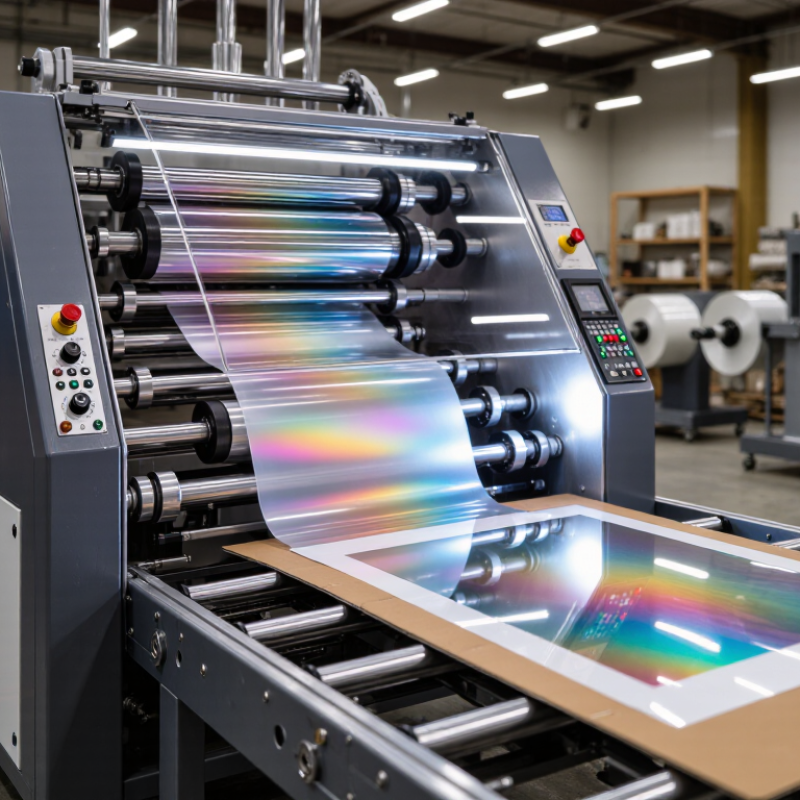
A holographic foil machine transfers a patterned foil onto paper, film, or coated materials. It uses controlled heat, pressure, and timing to create reflective visual effects. The final appearance depends on more than machine speed. Substrate texture, foil release properties, and surface coating also matter. A smooth carton may produce sharp rainbow patterns. A rough label can create broken details. That difference is easy to underestimate.
The application should guide the machine choice. Packaging often needs accurate registration across repeated designs. Labels may require narrow web handling and stable tension control. Covers and promotional cards may need a larger working area. Check the usable foil width, temperature range, pressure adjustment, and registration system before comparing output rates. A reliable trial should use your actual material, artwork, and foil. Samples reveal problems that product brochures cannot.
A faster machine is not always better. Excessive heat can distort thin films, while weak pressure may leave dull patches. Operators should record settings, inspect edges, and monitor waste during testing. Small misalignments become obvious under strong lighting. Maintenance access also affects real productivity. If cleaning takes too long, daily output may fall. I would avoid choosing equipment from speed figures alone. The better question is whether the machine produces consistent results with manageable adjustments. There is no perfect setting. Some materials remain unpredictable.
Identifying Your Material, Product, and Production Requirements
Choosing a holographic foil machine starts with the material, not the machine’s appearance. Test the foil on your actual substrate, such as coated paper, plastic film, or leather-like sheets. Surface tension, thickness, and heat sensitivity affect transfer quality. A foil that works on paper may wrinkle on flexible film. Check the recommended temperature, pressure, and dwell time for each material. Small samples reveal more than a showroom demonstration. Keep records of every test setting.
Your product determines the working width, pattern accuracy, and finishing method. Packaging with fine text needs stable registration and clean release. Decorative labels may prioritize speed, while detailed effects require sharper control. Measure the largest repeat area before selecting a machine. Consider whether you need flatbed, roll-to-roll, or hybrid production. Do not choose capacity from a single busy week. That mistake is easy. Review your average volume, peak orders, artwork changes, and acceptable waste.
Estimate realistic output using finished pieces, not the machine’s advertised speed. Include setup, cleaning, foil changes, and rejected sheets in your calculations. A high-speed machine may slow down with complex graphics or delicate substrates. Ask for test runs using your artwork and material. Inspect adhesion, edge definition, color consistency, and registration under normal lighting. Safety matters too. Verify guarding, ventilation, operator access, and maintenance procedures before purchase. I have seen projects fail because testing focused only on appearance. Leaving extra capacity is wise, though it can increase the initial cost.
Comparing Holographic Foil Machine Types and Working Methods
How to Choose a Holographic Foil Machine?
Comparing Holographic Foil Machine Types and Working Methods
Holographic foil machines mainly use hot stamping, cold foil transfer, or roll-to-roll embossing. Each method creates a different balance between detail, speed, heat, and setup cost.
Hot stamping uses a heated die, pressure, and metallic foil. The die presses the foil onto paper, plastic, or coated board. It produces sharp patterns and strong adhesion. Operators must control temperature, pressure, and dwell time carefully. Excess heat can distort thin films or soften sensitive coatings. This method suits premium cartons, labels, and short production runs.
Cold foil transfer uses adhesive and a printing unit instead of a heated die. It works faster on many web-fed systems and handles fine graphics well. However, adhesive coverage controls the final shine. Uneven coating may create dull patches. Registration also becomes difficult when several colors move at high speed.
Roll-to-roll embossing adds texture through patterned rollers. It is efficient for continuous films, but roller alignment requires regular inspection.
Choose the machine around substrate thickness, pattern depth, production volume, and acceptable waste. Ask for test samples using your actual material. A sample can reveal cracking, poor adhesion, or weak holographic depth. Do not trust speed claims alone. Real output changes with artwork, operator skill, and drying conditions. Some settings remain imperfect, even after careful adjustment. That uncertainty deserves a small testing budget.
Evaluating Key Specifications, Features, and Operating Costs
Choosing a holographic foil machine requires more than comparing maximum speed. Working width, temperature stability, embossing pressure, registration accuracy, and foil-saving controls directly affect output quality. A wider machine may reduce unit costs, but it can waste material during short runs. According to Grand View Research’s Holographic Films Market report, the market was valued at approximately USD 11.5 billion in 2023, with continued growth expected through 2030. This supports demand, but market growth does not guarantee a quick return on investment.
Calculate operating costs per finished sheet. Include electricity, foil consumption, setup waste, maintenance, operator time, and rejected sheets. A machine running at 6,000 sheets per hour may perform slower in real production. Substrates, artwork coverage, and curing conditions change the result. Smithers’ reports on specialty and decorative packaging also emphasize premium effects, material efficiency, and production consistency. Ask suppliers for a live trial using your actual paper or film. My early estimates often ignored cleaning time. That was a costly mistake.
Tips: Request a 30-day production sample, not only a speed demonstration. Check foil advance control, automatic tension adjustment, pressure settings, and spare-part availability. Build a three-year cost model before purchasing. Also measure power usage during standby and warm-up; small daily losses become significant over thousands of operating hours. Sources: Grand View Research, Holographic Films Market, 2024; Smithers, specialty packaging market outlook reports.
How to Choose a Holographic Foil Machine? - Evaluating Key Specifications, Features, and Operating Costs
| Machine Configuration | Typical Working Area | Typical Production Speed | Compatible Materials | Heating Range | Installed Power | Estimated Purchase Cost | Best Fit |
|---|---|---|---|---|---|---|---|
| Manual or Semi-Automatic Flatbed | Up to approximately 320 × 450 mm | Approximately 300–1,200 sheets/hour | Paper, coated stock, synthetic labels, selected plastic films | Approximately 80–160°C | About 1.5–3.0 kW | Approximately US$3,000–US$12,000 | Short runs, prototypes, invitations, packaging samples |
| Automatic Flatbed Foil Stamper | Approximately 320 × 450 mm to 560 × 760 mm | Approximately 1,500–4,500 sheets/hour | Paperboard, laminated paper, coated paper, selected synthetic substrates | Approximately 90–180°C | About 4–10 kW | Approximately US$15,000–US$60,000 | Commercial print shops and medium-volume packaging work |
| Roll-to-Roll Holographic Foil Embosser | Web width commonly 200–700 mm | Approximately 20–80 m/min | Pressure-sensitive labels, film webs, foil webs, flexible packaging materials | Approximately 100–190°C | About 8–25 kW | Approximately US$35,000–US$150,000 | Continuous label, film, and high-volume decorative production |
| Inline Digital Foil and Holographic Finishing System | Commonly 330–560 mm web or sheet width | Approximately 10–50 m/min, depending on coverage and substrate | Coated paper, labels, synthetic media, digitally printed sheets | Approximately 60–150°C | About 5–18 kW | Approximately US$40,000–US$180,000 | Variable-data work, personalized packaging, and short-to-medium runs |
Key Specifications and Operating-Cost Considerations
| Evaluation Factor | Recommended Requirement | Why It Matters | Typical Cost or Performance Impact |
|---|---|---|---|
| Temperature Control | Digital control with stable temperature regulation of approximately ±2–5°C | Helps prevent incomplete transfer, foil sticking, substrate distortion, and inconsistent gloss | Better control can reduce setup waste and rejected sheets |
| Pressure Adjustment | Independent pressure adjustment with a measurable pressure range | Different papers, films, and embossing depths require different pressure settings | Improves die and plate life while reducing substrate damage |
| Foil-Saving System | Intermittent foil feed, foil-stop control, or programmable foil advance | Limits unused foil between impressions and improves material utilization | Foil consumption may be reduced by approximately 10–30%, depending on artwork and layout |
| Registration Accuracy | Mechanical registration guides and, for automated systems, optical or servo-assisted registration | Maintains alignment between printed graphics, holographic patterns, and embossed areas | Higher accuracy generally increases machine cost but reduces rework |
| Warm-Up Time | Approximately 10–30 minutes for most heated flatbed systems | Affects job changeover time and daily productivity | Shorter warm-up reduces idle labor and energy consumption |
| Electrical Consumption | Compare rated power with actual duty cycle and local electricity rates | Heaters, drives, compressors, and vacuum systems may consume power at different rates | A 10 kW machine operating at a 50% average load uses about 5 kWh per operating hour |
| Routine Maintenance | Accessible rollers, replaceable heating elements, lubrication points, and documented service intervals | Simplifies preventive maintenance and reduces unplanned downtime | Budget approximately 2–5% of purchase price annually for routine maintenance and wear parts |
| Floor Space and Installation | Allow the machine footprint plus at least 600–1,000 mm for operator access and material handling | Adequate clearance improves safety, loading efficiency, and service access | Installation may require dedicated electrical supply, compressed air, ventilation, and floor reinforcement |
| Operator and Safety Features | Emergency stops, guards, temperature alarms, overload protection, and clear operating controls | Reduces injury risk and protects the machine during abnormal operation | Safety accessories add upfront cost but can reduce downtime and compliance risk |
Note: The figures above represent common market ranges for comparable holographic foil stamping, embossing, and finishing equipment. Actual results depend on substrate, foil type, image coverage, tooling, production layout, operator skill, and regional installation costs.
Selecting a Machine Based on Quality, Capacity, and Maintenance Needs
How to Choose a Holographic Foil Machine?
Selecting a holographic foil machine starts with output quality, not speed alone. Inspect sample sheets under angled light. Look for sharp patterns, even adhesion, and clean edges around small text. Stable temperature and pressure matter when designs include fine lines. Ask for a live demonstration using material similar to your own stock. A polished sample on different material may hide practical limitations.
Capacity should match your regular workload, with some room for seasonal demand. Check maximum foil width, roll diameter, operating speed, and changeover time. A fast machine may still lose hours through frequent adjustments. Consider the operator’s workflow, too. An impressive specification is not always useful. Smaller facilities may prefer flexible settings over maximum throughput.
Tips: Test before buying. Measure real downtime. Request maintenance records. Choose accessible heating parts and clearly marked controls. Ask how often rollers, sensors, and tension components need inspection. Keep spare wear parts available. A simple cleaning routine can protect surface quality and reduce unexpected stoppages. Do not ignore noise, heat, or difficult access during the trial. These details seem minor, but they can shape daily productivity. My view is slightly cautious: the most advanced machine is not automatically the best choice. Reliable results, manageable capacity, and practical maintenance usually create stronger long-term value.
How to Choose a Holographic Foil Machine?
Selecting a machine based on quality, capacity, and maintenance needs
Typical equipment specifications show that higher-throughput machines can process more material per minute and may provide more consistent registration, but they often require greater investment and more specialized servicing. Compact machines generally need less maintenance time and are suitable for shorter production runs. Actual performance depends on substrate, foil type, artwork complexity, setup quality, and operating conditions.