
How to Choose Stainless Steel Fittings for Your Project?
Choosing the right stainless steel fittings can determine whether a piping project performs reliably or develops costly problems later. A fitting may look polished and well made, yet still fail in a chlorinated, acidic, or high-temperature environment. Material grade, pressure rating, connection type, size, and operating conditions must work together. Stainless steel is not one universal solution.
In practical projects, 304 stainless steel often suits clean water, food processing, and general indoor service. 316 stainless steel usually offers better resistance to chlorides and marine exposure. However, the correct choice depends on concentration, temperature, flow, and cleaning chemicals. Small details matter. A threaded fitting may simplify installation, while a welded connection can reduce leak paths in demanding systems. Check thread standards, wall thickness, dimensional tolerances, and gasket compatibility before ordering.
Do not rely on appearance alone.
Experienced engineers also review certificates, pressure-test records, heat numbers, and supplier traceability. These documents support confidence when equipment must operate continuously or pass inspection. Still, documentation can be incomplete, and specifications may contain assumptions that need questioning. I have seen projects select premium fittings without checking the weakest valve or gasket. That defeats the purpose.
This guide explains how to compare stainless steel fittings based on real operating needs, not marketing claims. It also highlights common selection mistakes, installation concerns, and questions worth asking suppliers. The goal is practical judgment: a fitting that matches the system, the environment, and the consequences of failure.
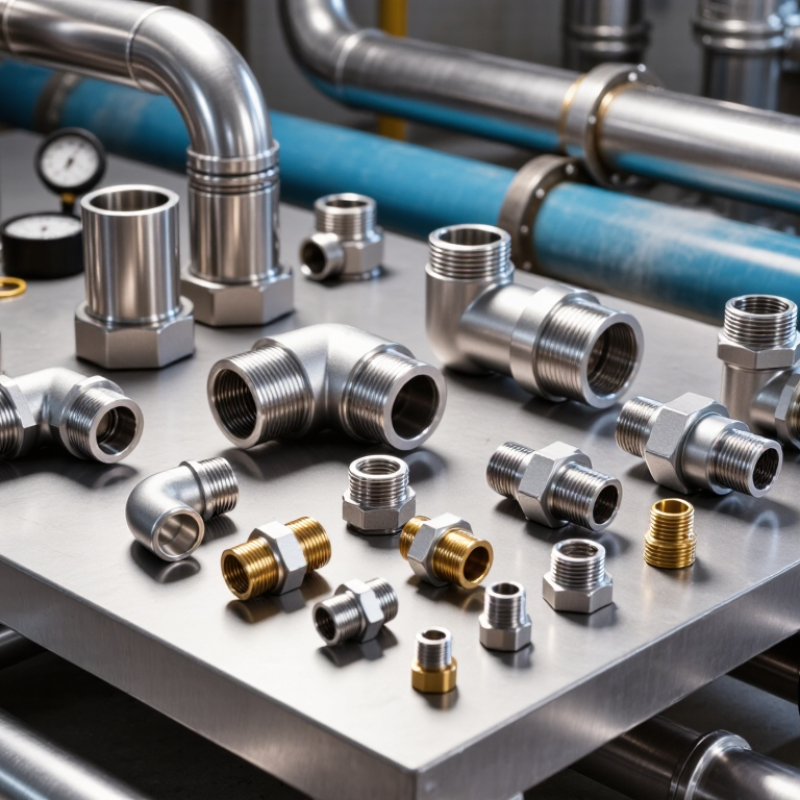
Define System Requirements: Size, Temperature, Pressure, and Fluid Type
Before selecting stainless steel fittings, define the system clearly. Record pipe size, connection type, operating temperature, maximum pressure, and fluid composition. These details control safety and service life. A fitting suitable for cold water may fail in hot oil or chemical service.
Measure the actual pipe, not only the drawing. Check wall thickness, thread dimensions, and available installation space. Temperature can reduce pressure capacity, especially in demanding systems. Fluid compatibility also matters. Chloride-rich water, cleaning chemicals, and acidic fluids may cause corrosion, even when the fitting looks flawless. I have seen projects focus on stainless steel grade while overlooking gasket compatibility. That small mistake created leakage during testing. Do not guess.
Tips: Build a simple requirement sheet before ordering. Include normal and maximum pressure, minimum and maximum temperature, fluid concentration, flow direction, and cleaning method. Confirm the fitting’s pressure rating at the intended temperature. Leave room for maintenance tools and thermal expansion. If requirements are uncertain, test a sample under realistic conditions. A quick check helps.
Choose the connection style according to the application. Threaded fittings suit many compact assemblies, while welded connections can reduce leak paths in permanent pipework. Compression fittings may simplify field installation, but tube preparation must be precise. Review drawings with an experienced technician before fabrication. Specifications can be imperfect, and site conditions often differ from early assumptions. That difference deserves attention.
Select 304 or 316 Stainless Steel Using ASTM A240 Chemistry Data
How to Choose Stainless Steel Fittings for Your Project?
ASTM A240 chemistry data gives a clear starting point for choosing stainless steel fittings.
Grade 304 typically contains 18–20% chromium and 8–10.5% nickel. Its carbon limit is 0.07% maximum.
Grade 316 usually contains 16–18% chromium, 10–14% nickel, and 2–3% molybdenum.
That molybdenum improves resistance to chlorides, saltwater, and many chemical environments. Small numbers matter here.
Look beyond the grade name. Request the material test report and compare its heat analysis with ASTM limits. Check carbon, chromium, nickel, molybdenum, manganese, silicon, phosphorus, and sulfur.
For example, a coastal water line may justify 316, while an indoor compressed-air system may perform well with 304.
Temperature, weld exposure, cleaning chemicals, and stagnant water also influence the decision. A fitting can look perfect and still be unsuitable.
One detail is easy to miss. ASTM A240 covers stainless steel plate, sheet, and strip, not every fitting product. The fitting may require another applicable specification, while A240 chemistry helps verify the material family.
Confirm dimensions, pressure ratings, and corrosion requirements separately. Do not choose 316 only because it sounds stronger. It costs more, and the benefit may be limited in a dry, clean environment.
I would rather question an attractive quotation than trust an incomplete certificate. Chemistry is evidence, not the whole answer.
Match Fittings to ASME B16.5 Pressure Classes 150 Through 2500
Choose a pressure class that suits the system’s operating conditions, not just its nominal pressure. ASME B16.5 includes Classes 150, 300, 400, 600, 900, 1500, and 2500. A class number is not a universal pressure rating in psi. Allowable pressure changes with temperature and material group. That distinction matters.
Check the pressure-temperature tables for the selected stainless steel grade and flange size. Then confirm the fitting’s facing, dimensions, bore, and connection type match the adjoining flange and pipe. Class 150 may suit a lower-pressure utility line, while a hot, high-pressure process line may require a higher class. Verify the actual design conditions before specifying either. Small details matter.
Also check gasket and bolting compatibility, along with corrosion risks from the process fluid. Chloride exposure, for example, can affect stainless steel selection. B16.5 addresses flanges and flanged fittings; other fitting types may follow different standards. In practice, drawings and field measurements do not always agree, so flag mismatches before ordering. Recheck the material certificate and pressure-temperature rating against the project specification. A careful review can prevent an expensive fit-up problem.
Choose Connection Types Under ASME B16.9, ASME B16.11, or NPT Standards
How to Choose Stainless Steel Fittings for Your Project?
Choosing stainless steel fittings starts with the connection, not appearance.
ASME B16.9 covers factory-made wrought butt-welding fittings, such as elbows, tees, and reducers. These fittings create a continuous welded system with good flow and fewer crevices. They suit process lines where cleanliness, strength, and permanent installation matter. Confirm pipe outside diameter, wall thickness, grade, pressure, and temperature before ordering.
ASME B16.11 covers forged socket-welding and threaded fittings. Socket-weld fittings work well on smaller bore piping and demanding service, but welding requires correct insertion depth and careful inspection. NPT connections use tapered threads, generally under ASME B1.20.1. They allow easier disassembly, although poor alignment or excessive tightening can damage threads and cause leaks.
I have seen a fitting selected by nominal size alone fail the actual project requirements. That shortcut deserves a second look.
Tips:
- Match male and female NPT threads exactly.
- Keep thread sealant compatible with the fluid and temperature.
- Avoid forcing misaligned parts.
- Check markings, certificates, and dimensional requirements against the project specification.
- For welded joints, clean the stainless surfaces and control heat input.
- Small details matter.
Verify Corrosion Resistance, Dimensions, and Testing to ASTM A967
When selecting stainless steel fittings, start with the fluid, temperature, and cleaning conditions they will face. Chlorides, stagnant water, and repeated washdowns can change the corrosion risk. A fitting that performs well indoors may pit near a coastal process line. Match the stainless steel grade to the actual environment; passivation cannot make an unsuitable alloy suitable. Small details matter.
ASTM A967 covers chemical passivation treatments for stainless steel parts and includes test methods for evaluating surface cleanliness. Specify the applicable treatment and acceptance test rather than asking only for “A967 compliance.” The right test depends on the material and service conditions. A test result supports quality control, but it does not guarantee corrosion-free service. I would not treat a certificate alone as proof that the fitting suits your application.
Check dimensions against the mating components: connection type, nominal size, thread pitch, wall thickness, and pressure rating. A slight mismatch can cause leaks or complicate installation.
Compare the drawing with the purchase specification, and verify critical dimensions on received parts. Ask for material identification and passivation records when traceability matters. Specifications can be easy to misread, so confirm the test method and acceptance criteria before production.
Related Posts
-
Exploring the Benefits of Stainless Steel Fittings: Why They Are Essential for Your Home Plumbing Solutions
-
2026 Top Stainless Steel Fittings What Buyers Need to Know?
-
How to Choose the Right Stainless Steel Fittings for Your Project
-
Why Choose Stainless Steel Ball Valves for Your Plumbing Needs
-
What is a Pressure Regulator and How Does It Work?
-
Maximizing Efficiency: How Industrial Hose Reels Transform Your Workspace Productivity