
2026 Top High Carbon Steel Coil Types for Global Buyers
As global manufacturers prepare for 2026 sourcing decisions, High Carbon Steel Coil remains a critical material for springs, saw blades, knives, wires, and wear-resistant components. Its high carbon content supports hardness and strength, but it also reduces formability and increases cracking risks during processing. The right choice depends on carbon range, manganese content, thickness, surface condition, annealing status, and final application.
The World Steel Association reported approximately 1.88 billion tonnes of crude steel production in 2024. Its World Steel in Figures 2025 also shows how concentrated steel supply remains across major producing regions. However, broad production figures cannot identify the best coil for a precision spring or a stamped blade. Classification matters. Regional standards, mill practices, and testing methods can produce different results under similar grades.
Metallurgist George Krauss stated, “The properties of steels are determined by their microstructures.” That principle remains practical for international buyers. A bright coil surface may look reliable, yet its edge quality, spheroidized structure, hardness variation, and decarburization depth require documented testing. Buyers should request mill certificates, heat numbers, tensile results, hardness data, and independent inspection when risk is high.
There is no universal ranking.
This 2026 guide compares leading High Carbon Steel Coil types by grade, processing route, performance, and purchasing suitability. It considers widely used grades such as SAE 1070, SAE 1095, C75, C80, C90, and SK5. These grades are not interchangeable. A lower-cost coil may create higher slitting losses, extra heat-treatment work, or unexpected rejection rates. Some recommendations will remain application-dependent, and that limitation deserves honest attention.
What High Carbon Steel Coils Are and Why They Matter in 2026
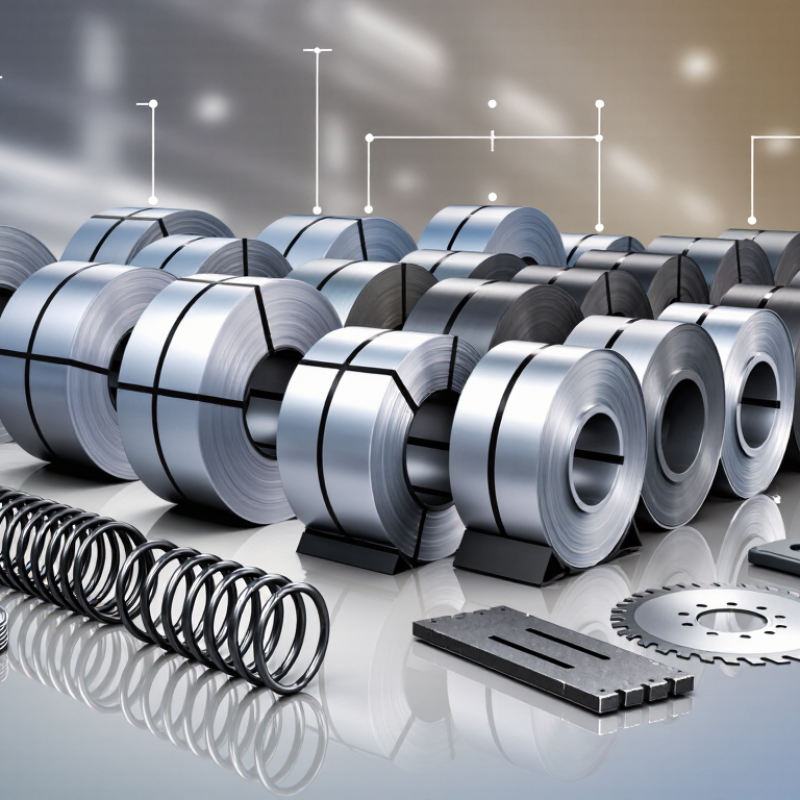
High carbon steel coils usually contain about 0.60% to 1.00% carbon. They offer high hardness, strength, and wear resistance after suitable heat treatment. Common types include hot-rolled spring steel, cold-rolled high-carbon strip, and tool-steel coil. Each type behaves differently during forming, welding, and cutting. That difference matters.
The World Steel Association reported 1.88 billion tonnes of crude steel production in 2024, through its World Steel in Figures 2025 report. However, the report does not separate high-carbon coil volumes. Buyers should avoid treating total steel demand as direct evidence of high-carbon demand. Automotive springs, saw blades, knives, agricultural parts, and industrial cutting tools remain important applications. In practice, carbon content alone is not enough. Mill tolerances, surface condition, coil shape, and heat-treatment response can change the final result.
Tips: Request the heat number, chemical analysis, hardness range, and coil weight before purchase. Confirm the applicable standard, such as EN, ASTM, or JIS. Ask for a sample bend test when forming performance matters. Also check decarburization depth. It is easy to overlook. A small surface defect may become a serious crack after hardening. Buyers should also compare total processing cost, not only the coil price. The OECD Steel Outlook has repeatedly highlighted uncertainty in global steel demand, so flexible specifications can reduce inventory risk in 2026. Yet flexibility has limits; accepting a broader carbon range may weaken production consistency.
2026 Top High Carbon Steel Coil Types for Global Buyers - What High Carbon Steel Coils Are and Why They Matter in 2026
| Representative grade / type | Common standard or designation | Typical carbon content (mass %) | Typical supply form | Key characteristics | Typical applications | Buyer considerations in 2026 |
|---|---|---|---|---|---|---|
| 1045 medium-high carbon steel | SAE J403 / AISI-SAE 1045 | 0.43–0.50 | Hot-rolled coil, cold-finished strip or cut-to-length sheet | Good balance of strength, toughness, machinability and induction-hardenability; weldability is lower than low-carbon grades. | Shafts, axles, pins, bolts, gears and general engineering components | Confirm heat-treatment condition, flatness, edge condition and whether the order requires coil or slit strip. |
| 1060 high-carbon steel | SAE J403 / AISI-SAE 1060 | 0.55–0.65 | Cold-rolled strip, annealed strip or hardened-and-tempered strip | Higher hardness and wear resistance than 1045; responds well to quench-and-temper treatment. | Springs, wear parts, agricultural blades and automotive or mechanical components | Request hardness range, tensile properties and decarburization limits when the material will be stamped or heat-treated. |
| 1070 high-carbon steel | SAE J403 / AISI-SAE 1070 | 0.65–0.75 | Cold-rolled strip, annealed coil or hardened-and-tempered strip | High hardness potential, good elastic response and improved wear resistance after heat treatment. | Flat springs, saw components, clips, blades and wear-resistant parts | Check forming limits and residual stress because higher carbon content can reduce cold-formability. |
| 1095 ultra-high-carbon steel | SAE J403 / AISI-SAE 1095 | 0.90–1.03 | Precision cold-rolled strip, annealed strip or hardened-and-tempered strip | Very high hardness and wear resistance after suitable heat treatment; limited weldability and cold-formability. | High-strength spring components, cutting blades, scrapers and wear parts | Verify thickness tolerance, spheroidized-annealed condition, surface quality and heat-treatment capability before purchase. |
| C45E / C45 carbon steel | EN 10083-2 / EN 10027-1 | 0.42–0.50 | Hot-rolled coil, strip or sheet; availability depends on thickness and producer | Medium-high strength with good machinability and suitability for normalizing or quench-and-temper treatment. | Machine parts, axles, shafts, studs and lightly stressed gears | Specify delivery condition and mechanical-property requirements separately from chemical composition. |
| C60E / C60 carbon steel | EN 10083-2 / EN 10027-1 | 0.57–0.65 | Cold-rolled strip, hot-rolled strip or sheet | Higher strength and wear resistance than C45E; suitable for heat-treated components. | Springs, washers, knives, wear plates and mechanical parts | For stamping operations, evaluate bend radius, edge quality, anisotropy and delivered hardness. |
| C75S spring steel | EN 10132-4 / EN 10027-1 | 0.70–0.80 | Cold-rolled spring strip, annealed or hardened-and-tempered | Good spring properties, fatigue performance and wear resistance when correctly heat-treated. | Clips, lock components, flat springs, saw blades and precision spring parts | Specify hardness, tensile strength, surface finish, burr limits and flatness for high-speed stamping. |
| C90S spring steel | EN 10132-4 / EN 10027-1 | 0.85–0.95 | Precision cold-rolled spring strip | Very high hardness and wear resistance potential; requires controlled forming and heat treatment. | Precision springs, cutting elements, scrapers and wear-resistant strip components | Confirm decarburization depth, strip thickness tolerance and surface defects because they can affect fatigue life. |
How High Carbon Steel Coils Are Classified by Carbon Content and Grade
2026 Top High Carbon Steel Coil Types for Global Buyers
How High Carbon Steel Coils Are Classified by Carbon Content and Grade
High carbon steel coils are commonly classified by carbon content, but the exact range depends on the standard used. Many purchasing specifications place high carbon steel between about 0.60% and 1.00% carbon. Above this range, some suppliers describe the material as ultra-high carbon steel. Buyers should confirm the definition in the applicable standard, not rely on a product label alone.
Carbon content strongly affects hardness, strength, and forming behavior. A coil near 0.60% carbon may offer better bending performance than one near 0.95%. A 0.80% carbon grade can suit blades, wear parts, and resilient components after heat treatment. Grades such as 1070, 1080, and 1095 indicate approximate carbon levels, while alloying elements may change toughness and hardenability. Small chemistry differences matter.
They do matter.
Experienced buyers also check manganese, silicon, sulfur, phosphorus, coil condition, and heat-treatment status. Cold-rolled material may provide tighter thickness control, while annealed coil is easier to form before hardening. A mill test certificate should match the heat number, dimensions, hardness, and tensile data. Surface scratches can become serious after stamping. I have seen classification decisions focus too heavily on carbon percentage. That approach is incomplete. End use, processing equipment, and required hardness should guide the final grade selection.
Key Manufacturing Processes and Quality Standards for Global Buyers
2026 Top High Carbon Steel Coil Types for Global Buyers
High carbon steel coils commonly serve springs, saw blades, knives, agricultural tools, and wear-resistant parts. Typical carbon content ranges from 0.60% to 1.00%, although the exact grade depends on hardness and forming needs. Cold-rolled coils offer tighter thickness control and cleaner surfaces. Hot-rolled coils usually provide lower cost and easier bulk processing. Spheroidized-annealed coils improve machinability before stamping or cutting. Hardened and tempered strip delivers higher strength, but it allows less correction after shipment.
Process discipline controls these differences. Steel may begin in a basic oxygen furnace or electric arc furnace, followed by continuous casting and controlled rolling. Cooling speed affects pearlite spacing, hardness, and cracking risk. Decarburization is easy to overlook. It can reduce surface hardness even when the chemical certificate looks acceptable. World Steel Association’s World Steel in Figures 2024 reports global crude steel production at about 1.89 billion tonnes in 2023, showing the enormous scale behind this supply chain.
Quality documents should connect chemistry, dimensions, surface condition, and mechanical results. ASTM A684 covers high-carbon steel strip, while ASTM A480 provides general requirements for flat-rolled stainless products and should not be applied blindly to carbon steel. EN 10132 may guide cold-rolled narrow steel for cold forming, depending on grade and application. ISO 9001 supports process control, but it does not replace tensile, hardness, flatness, or inclusion testing. Buyers should request heat numbers, sampling methods, test temperatures, and coil traceability. A perfect certificate is not enough. Independent verification remains worthwhile, especially when edge cracking or inconsistent hardness appears during production.
Comparing Coil Types by Performance, Applications, and Cost
2026 Top High Carbon Steel Coil Types for Global Buyers
Comparing Coil Types by Performance, Applications, and Cost
High carbon steel coils usually contain about 0.60% to 1.00% carbon. Their carbon level supports high hardness, strength, and wear resistance. Cold-rolled coils offer tighter thickness control and cleaner surfaces. They suit blades, saw components, and precision-formed parts. Hot-rolled coils cost less and handle heavier sections well. Their rougher surface may require additional processing.
Spring steel coils provide strong elastic recovery after repeated bending. They are common in clips, agricultural parts, and suspension components. Tool steel coils resist wear during cutting or forming operations. They can deliver better service life, but heat treatment increases total cost. Bearing-grade coils need strict cleanliness and consistent hardness. Performance is excellent, yet quality requirements are demanding. The cheapest coil is not always the economical choice.
Tips: Check carbon content, hardness range, thickness tolerance, and surface condition before ordering. Ask for mill test certificates and heat-treatment records. Compare landed cost, not only the quoted price. Include freight, slitting, inspection, and possible scrap. Test a small batch first. It may reveal forming problems early. Pay attention to climate and storage. Moisture can create surface rust before fabrication. One practical mistake is choosing maximum hardness without checking machinability. That decision may reduce productivity.
How to Select, Source, and Inspect High Carbon Steel Coils Internationally
In 2026, global buyers are comparing spring steel, bearing steel, tool steel, and high-carbon strip coils. Carbon content commonly ranges from about 0.60% to 1.20%, depending on the application. World Steel Association’s World Steel in Figures 2025 reports approximately 1.88 billion tonnes of crude steel production in 2024. This scale does not guarantee consistent coil quality. Grade selection still requires careful review of chemistry, processing, and end use.
Request a mill test certificate before purchasing. Check carbon, manganese, silicon, chromium, phosphorus, and sulfur against the agreed specification. For international shipments, EN 10204 Type 3.1 certification provides traceable test results. ASTM A510/A510M can support requirements for carbon steel wire and rod products. Ask for heat numbers, rolling direction, coil weight, inner diameter, and dimensional tolerances. Small details matter.
Inspection should combine documents with physical evidence. Measure thickness at several points across the strip, not only near the edge. Examine the surface under strong angled light for scale, cracks, scratches, and rust staining. For critical parts, consider hardness mapping, tensile testing under ISO 6892-1, decarburization checks, and ultrasonic or eddy-current testing. OECD steel market reports continue to highlight overcapacity and trade uncertainty, so supplier claims deserve verification. I would not accept a perfect-looking certificate alone; sampling can be limited, and that weakness needs honest review before loading.
2026 High Carbon Steel Coil Types for Global Buyers
The chart compares the nominal carbon content of commonly specified AISI/SAE high-carbon steel grades used in coil applications. Higher carbon content generally supports greater hardness and wear resistance after suitable heat treatment, but it can reduce formability and weldability. Buyers should verify the exact chemical composition, dimensional tolerances, surface condition, mechanical properties, and inspection requirements against the applicable mill certificate and standard.